
S90-09A · Question #28
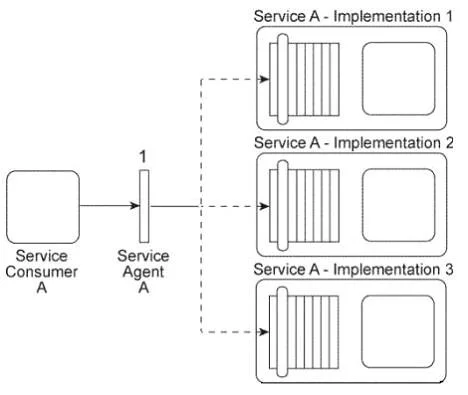
Service Consumer A sends a message to Service A. There are currently three duplicate implementations of Service A (Implementation 1, Implementation 2, Implementation 3). The message sent by Service…
Sign in or unlock S90-09A to reveal the answer and full explanation for question #28. The question stem and answer options stay visible for context.
Question
Service Consumer A sends a message to Service A. There are currently three duplicate implementations of Service A (Implementation 1, Implementation 2, Implementation 3). The message sent by Service Consumer A is intercepted by Service Agent A (1), which determines at runtime which implementation of Service A to forward the message to. All three implementations of Service A reside on the same physical server. You are told that after Service A was deployed, each of its three implementations was claimed by a different IT department, which means each implementation of Service A has a different owner. You are informed that a new service capability will soon need to be added to Service A . This service capability will introduce new business logic specific to Service A as well as logic required to access a shared database. What steps can be taken to ensure that the service owners will each add the service capability in a consistent manner to their respective implementations of Service A?
Exhibit
Options
- AThe Contract Centralization pattern can be applied so that when the new service capability is
- BThe Legacy Wrapper pattern can be applied to establish a new wrapper utility service that will
- CThe Standardized Service Contract principle is applied to ensure that the new service capability is
- DNone of the above.
Unlock S90-09A to see the answer
You've previewed enough free S90-09A questions. Unlock S90-09A for full answers, explanations, the timed quiz mode, progress tracking, and the master PDF. Question stem and options stay visible so you can still see what's on the exam.