
S90-09A · Question #29
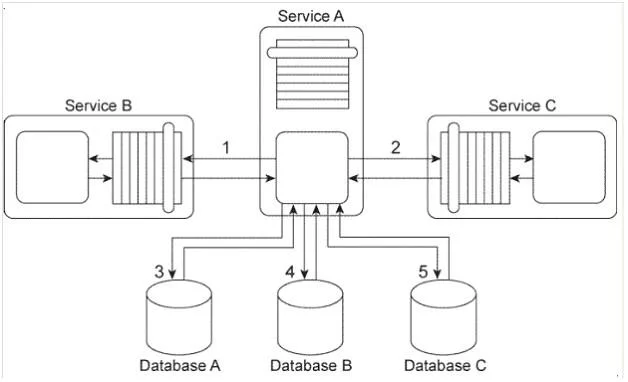
Service A sends a message to Service B (1). After Service B writes the message contents to Database A (2) it issues a response message back to Service A (3). Service A then sends a message to…
Sign in or unlock S90-09A to reveal the answer and full explanation for question #29. The question stem and answer options stay visible for context.
Question
Service A sends a message to Service B (1). After Service B writes the message contents to Database A (2) it issues a response message back to Service A (3). Service A then sends a message to Service C (4). Upon receiving this message, Service C sends a message to Service D (5), which then writes the message contents to Database B (6) and issues a response message back to Service C (7). Service A and Service D are in Service Inventory A. Service B and Service C are in Service Inventory B. You are told that in this service composition architecture, all four services are exchanging invoice- related data in an XML format. However, the services in Service Inventory A are standardized to use a different XML schema for invoice data than the services in Service Inventory B. Also, Database A can only accept data in the Comma Separated Value (CSV) format and therefore cannot accept XML formatted data. Database B only accepts XML formatted data. However, it is a legacy database that uses a proprietary XML schema to represent invoice data that is different from the XML schema used by services in Service Inventory A or Service Inventory B. What steps can be taken to enable the planned data exchange between these four services?
Exhibit
Options
- AThe Data Model Transformation pattern can be applied so that data model transformation logic is
- BThe Data Model Transformation pattern can be applied so that data model transformation logic is
- CThe Data Model Transformation pattern can be applied so that data model transformation logic is
- DNone of the above.
Unlock S90-09A to see the answer
You've previewed enough free S90-09A questions. Unlock S90-09A for full answers, explanations, the timed quiz mode, progress tracking, and the master PDF. Question stem and options stay visible so you can still see what's on the exam.