
S90-09A · Question #10
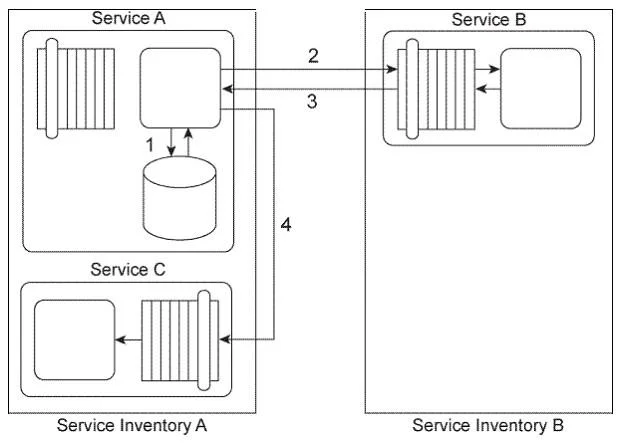
Service A is a task service that sends Service B a message (2) requesting that Service B return data back to Service A in a response message (3). Depending on the response received. Service A may be…
Sign in or unlock S90-09A to reveal the answer and full explanation for question #10. The question stem and answer options stay visible for context.
Question
Service A is a task service that sends Service B a message (2) requesting that Service B return data back to Service A in a response message (3). Depending on the response received. Service A may be required to send a message to Service C (4) for which it requires no response. Before it contacts Service B, Service A must first retrieve a list of code values from its own database (1) and then place this data into its own memory. If it turns out that it must send a message to Service C, then Service A must combine the data it receives from Service B with the data from the code value list in order to create the message it sends to Service C. If Service A is not required to invoke Service C, it can complete its task by discarding the code values. Service A and Service C reside in Service Inventory A. Service B resides in Service Inventory B. You are told that the services in Service Inventory A were designed with service contracts based on different design standards than the services in Service Inventory B. As a result, Service A and Service B use different data models to represent the data they need to exchange. Therefore, Service A and Service B cannot currently communicate. Furthermore, Service C is an agnostic service that is heavily accessed by many concurrent service consumers. Service C frequently reaches its usage thresholds during which it is not available and messages sent to it are not received. How can this service composition architecture be changed to avoid these problems?
Exhibit
Options
- AThe Data Model Transformation pattern can be applied by establishing an intermediate processing
- BThe Data Model Transformation pattern can be applied by establishing an intermediate processing
- CThe Data Model Transformation pattern can be applied by establishing an intermediate processing
- DNone of the above.
Unlock S90-09A to see the answer
You've previewed enough free S90-09A questions. Unlock S90-09A for full answers, explanations, the timed quiz mode, progress tracking, and the master PDF. Question stem and options stay visible so you can still see what's on the exam.