
S90-09A · Question #9
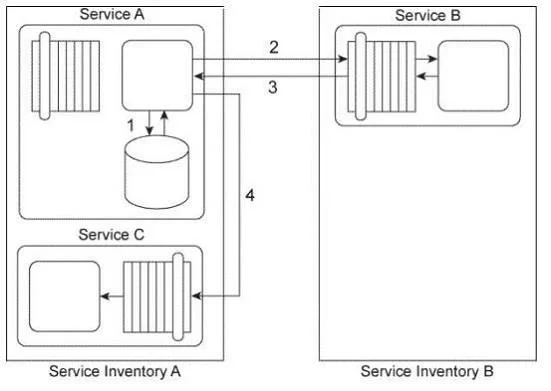
Service A is a task service that sends Service B a message (2) requesting that Service B return data back to Service A in a response message (3). Depending on the response received. Service A may be…
Sign in or unlock S90-09A to reveal the answer and full explanation for question #9. The question stem and answer options stay visible for context.
Question
Service A is a task service that sends Service B a message (2) requesting that Service B return data back to Service A in a response message (3). Depending on the response received. Service A may be required to send a message to Service C (4) for which it requires no response. Before it contacts Service B, Service A must first retrieve a list of code values from its own database (1) and then place this data into its own memory. If it turns out that it must send a message to Service C, then Service A must combine the data it receives from Service B with the data from the code value list in order to create the message it sends to Service C. If Service A is not required to invoke Service C, it can complete its task by discarding the code values. Service A and Service C reside in Service Inventory A. Service B resides in Service Inventory B. You are told that the services in Service Inventory A are all SOAP-based Web services designed to exchange SOAP 1.1 messages and the services in Service Inventory B are SOAP-based Web services designed to exchange SOAP 1.2 messages. Therefore, Service A and Service B cannot currently communicate. Furthermore, you are told that Service B needs to access a shared database in order to retrieve the data required by Service A. The response time of the database can sometimes be lengthy, which would cause Service A to consume too much resources while it is waiting and keeping the code values in memory. How can this service composition architecture be changed to avoid these problems?
Exhibit
Options
- AThe Protocol Bridging pattern can be applied by establishing an intermediate processing layer
- BThe Protocol Bridging pattern can be applied by establishing an intermediate processing layer
- CThe Protocol Bridging pattern can be applied by establishing an intermediate processing layer
- DNone of the above.
Unlock S90-09A to see the answer
You've previewed enough free S90-09A questions. Unlock S90-09A for full answers, explanations, the timed quiz mode, progress tracking, and the master PDF. Question stem and options stay visible so you can still see what's on the exam.