
S90-09A · Question #30
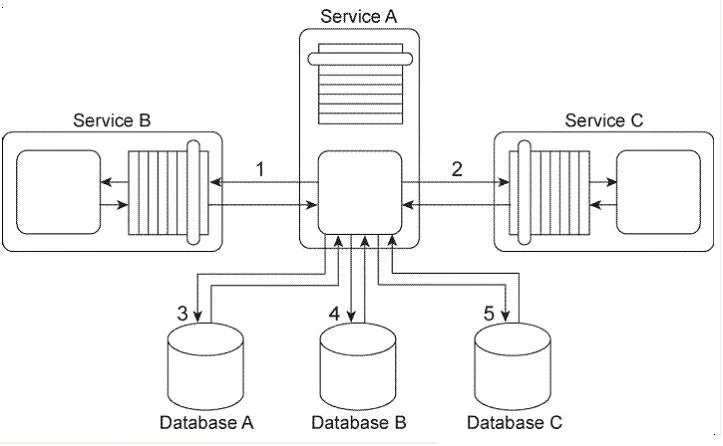
You are told that in this service composition architecture, all four services are exchanging invoice- related data in an XML format. The services in Service Inventory A are standardized to use a…
Sign in or unlock S90-09A to reveal the answer and full explanation for question #30. The question stem and answer options stay visible for context.
Question
You are told that in this service composition architecture, all four services are exchanging invoice- related data in an XML format. The services in Service Inventory A are standardized to use a specific XML schema for invoice data. Design standards were not applied to the service contracts used in Service Inventory B, which means that each service uses a different XML schema for the same kind of data. Database A and Database B can only accept data in the Comma Separated Value (CSV) format and therefore cannot accept XML formatted data. What steps can be taken to enable the planned data exchange between these four services?
Exhibit
Options
- AThe Data Model Transformation pattern can be applied so that data model transformation logic is
- BThe Data Model Transformation pattern can be applied so that data model transformation logic is
- CThe Data Model Transformation pattern can be applied so that data model transformation logic is
- DNone of the above.
Unlock S90-09A to see the answer
You've previewed enough free S90-09A questions. Unlock S90-09A for full answers, explanations, the timed quiz mode, progress tracking, and the master PDF. Question stem and options stay visible so you can still see what's on the exam.