
PMI-RMP · Question #360
A well established project begins to experience cost overruns and falls behind schedule. The project risk register identifies many risks and risk response plans in place, yet many risks are…
The correct answer is B. Improve the risk analysis to better define root causes. Option B is correct because the pattern of risks maturing into issues despite having response plans in place reveals a flaw in the quality of the risk analysis, not the quantity - specifically, that root causes were not properly identified, leaving response plans too shallow to…
Question
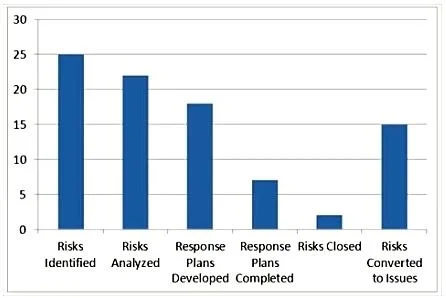
A well established project begins to experience cost overruns and falls behind schedule. The project risk register identifies many risks and risk response plans in place, yet many risks are transitioning into issues. As the risks occur and become issues, many of the response plans are in progress, but not complete. The data from this graph represents the status of the project risks. Based on this information, what improvement to the risk management process is required?
Exhibit
Options
- AIncrease the project risk identification and analysis.
- BImprove the risk analysis to better define root causes.
- CTransition to an issue management program and close the remaining open risks.
- DReview remaining risk response plans and invest in schedule quality improvements.
How the community answered
(30 responses)- A27% (8)
- B57% (17)
- C10% (3)
- D7% (2)
Explanation
Option B is correct because the pattern of risks maturing into issues despite having response plans in place reveals a flaw in the quality of the risk analysis, not the quantity - specifically, that root causes were not properly identified, leaving response plans too shallow to prevent or contain the risks. When response plans exist but fail to stop issues from occurring, it signals the plans were built on incomplete understanding of why the risk would occur, not just that it might. Option A is wrong because the risk register is already well-populated; adding more identification doesn't fix plans that aren't working. Option C is dangerously reactive - abandoning risk management for issue management surrenders the proactive posture entirely and leaves remaining risks unmitigated. Option D is a partial improvement but treats a symptom (incomplete plans) rather than the cause (flawed analysis), and "schedule quality improvements" is too vague to address the root problem.
Memory tip: Think of it as the "Why behind the What" rule - a risk register tells you what could go wrong, but only solid root cause analysis tells you why, which is what makes response plans actually work.
Topics
Community Discussion
No community discussion yet for this question.