
S90-09A · Question #24
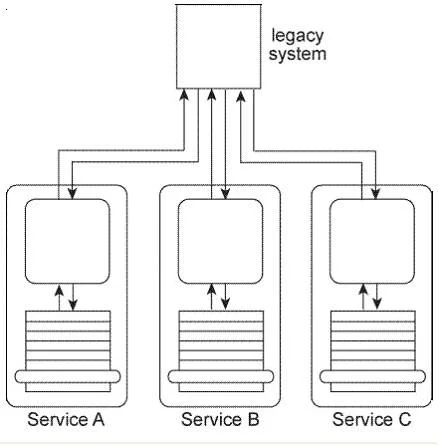
Service A. Service B. and Service C are each designed to access the same shared legacy system. The service contracts for Service A, Service B, and Service C are standardized and decoupled from the…
Sign in or unlock S90-09A to reveal the answer and full explanation for question #24. The question stem and answer options stay visible for context.
Question
Service A. Service B. and Service C are each designed to access the same shared legacy system. The service contracts for Service A, Service B, and Service C are standardized and decoupled from the underlying service logic. Service A and Service B are agnostic services that are frequently reused by different service compositions. Service C is a non-agnostic task service that requires access to the legacy system in order to retrieve business rules required for the service to make runtime decisions that determine its service composition logic. The legacy system uses a proprietary file format that Services A, B, and C need to convert to and from. Service A is an agnostic utility service that is used by other services to gain access to the legacy system. Services B and C were not designed to access the legacy system via Service A because the Service A service contract was derived from the legacy system API and is therefore not standardized and exhibits negative contract-to-implementation coupling. You are told that additional services need to be created, all of which need access to the legacy system. You are also told that the legacy system may be replaced in the near future. What steps can be taken to ensure that the replacement of the legacy system has a minimal impact on Services B and C and any future services that are designed to rely upon it?
Exhibit
Options
- AThe Service Abstraction, Service Reusability, and Service Autonomy principles need to be applied
- BThe Standardized Service Contract and Service Loose Coupling principles can be applied in order
- CThe Legacy Wrapper pattern can be applied together with the Standardized Service Contract
- DNone of the above.
Unlock S90-09A to see the answer
You've previewed enough free S90-09A questions. Unlock S90-09A for full answers, explanations, the timed quiz mode, progress tracking, and the master PDF. Question stem and options stay visible so you can still see what's on the exam.