nerdexam
SOA

S90-09A · Question #21

Service A has become increasingly difficult to maintain. Its core service logic has become bloated and convoluted because it has been updated numerous times during which additional functionality was…

The correct answer is B. The Official Endpoint pattern can be applied to limit access to Service A to one of its two published. Option B is correct because the root problem is that Service Consumer C bypasses the two published service contracts and accesses Service A directly, which forces the service's core logic to accommodate this unofficial interaction - contributing to the bloat and complexity…

Advanced Service Design and Patterns

Question

Service A has become increasingly difficult to maintain. Its core service logic has become bloated and convoluted because it has been updated numerous times during which additional functionality was added to interact with the database and the legacy system and to support interaction with Service Consumers A and B (via the two service contracts) as well as interaction directly with Service Consumer C. What steps can be taken to solve these problems and to prevent them from happening again in the future?

Exhibit
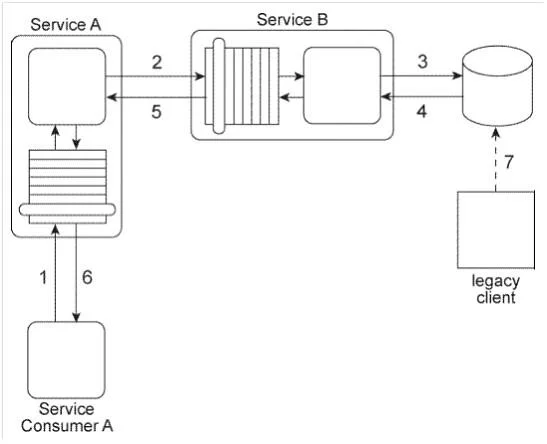
S90-09A question #21 exhibit

Options

  • AThe Service Facade pattern can be applied to position a Facade component between the core
  • BThe Official Endpoint pattern can be applied to limit access to Service A to one of its two published
  • CThe Service Faade pattern can be applied to position a Facade component between the core
  • DNone of the above.

How the community answered

(53 responses)
  • A
    2% (1)
  • B
    75% (40)
  • C
    8% (4)
  • D
    15% (8)

Explanation

Option B is correct because the root problem is that Service Consumer C bypasses the two published service contracts and accesses Service A directly, which forces the service's core logic to accommodate this unofficial interaction - contributing to the bloat and complexity. Applying the Official Endpoint pattern enforces that all consumers access the service exclusively through its officially published endpoints, eliminating the ad-hoc direct access and preventing similar violations in the future.

Options A and C both describe the Service Facade pattern (C is simply a character-encoding artifact of A - "Faade" = "Façade"), which addresses how a service presents itself externally but does not solve the core issue of unauthorized direct consumer access bypassing the contracts. The Facade pattern would add indirection, not enforce contract compliance.

Memory tip: Think "Official Endpoint = No Side Doors" - when a consumer is sneaking in through a back door (direct access) instead of the front door (published contract), the Official Endpoint pattern locks the back door and forces everyone to use the front.

Topics

#Service Facade pattern#service maintainability#service decomposition#service contracts

Community Discussion

No community discussion yet for this question.

Full S90-09A Practice