
AZ-400 · Question #9
Case Study 2 - Contoso, Ltd Background Contoso, Ltd. is a manufacturing company that has a main office in Chicago. Contoso plans to improve its IT development and operations processes by…
This hotspot question tests knowledge of Azure DevOps branching strategies and fork policies for enabling isolated team development while maintaining build policy enforcement on Project2.
Question
Exhibits
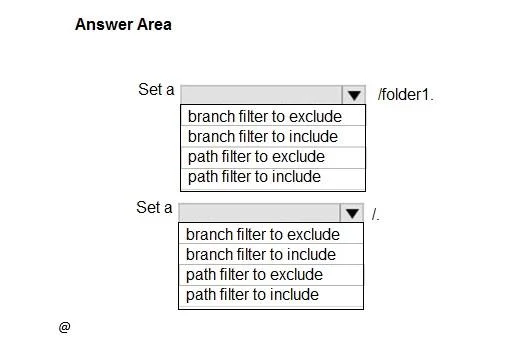
Answer Area
- Set a ... /folder1.branch filter to excludebranch filter to includepath filter to excludepath filter to include
- Set a ... /.branch filter to excludebranch filter to includepath filter to excludepath filter to include
Explanation
This hotspot question tests knowledge of Azure DevOps branching strategies and fork policies for enabling isolated team development while maintaining build policy enforcement on Project2.
Approach. The correct code flow strategy for Project2 involves using a Fork-based workflow. Team2 should fork the Project2 repository, which creates an independent copy they can work on freely. When Team2 submits pull requests back to the main Project2 repository, those PRs are subject to the same branch policies (build policies) defined on the target branch. This satisfies all three requirements: Team2 can submit pull requests, work independently on their fork, and any intermediary changes on the fork that are submitted via PR will be validated against Project2's build policies. A fork is preferred over a branch in this scenario because the team needs to work independently on a copy - forks provide repository-level isolation while still enforcing policies at the PR merge point.
Concept tested. Azure DevOps Fork-based branching strategy - understanding when to use forks versus branches, and how fork pull requests inherit and are subject to the build/branch policies of the upstream (target) repository.
Reference. https://learn.microsoft.com/en-us/azure/devops/repos/git/forks?view=azure-devops
Topics
Community Discussion
No community discussion yet for this question.