
352-001 · Question #725
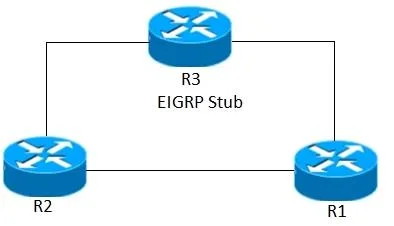
Refer to the exhibit. In which two ways is this network impacted if link instability exists between R1 and R2? (Choose two.)
The correct answer is A. R3 will have routes in its routing table that originate from R1 and R2 B. R3 will not be transit for traffic between R1 and R2. Link instability between R1 and R2 causes route churn in R3's table, but R3 does not become a transit router because a direct link exists between R1 and R2.
Question
Refer to the exhibit. In which two ways is this network impacted if link instability exists between R1 and R2? (Choose two.)
Exhibit
Options
- AR3 will have routes in its routing table that originate from R1 and R2
- BR3 will not be transit for traffic between R1 and R2
- CR1 will have routes in its routing table that originate from R2 and R3
- DR2 will have routes in its routing table that originate from R1 and R3
- ER3 will be transit for traffic between R1 and R2
How the community answered
(36 responses)- A56% (20)
- C25% (9)
- D14% (5)
- E6% (2)
Why each option
Link instability between R1 and R2 causes route churn in R3's table, but R3 does not become a transit router because a direct link exists between R1 and R2.
R3 peers with both R1 and R2, so it installs routes originating from each; the instability on the R1-R2 link causes repeated route withdrawals and re-advertisements that continuously update R3's routing table with prefixes from both routers.
R1 and R2 communicate over their direct link, so traffic between them is not forwarded through R3; R3 is adjacent to both but is not in the forwarding path between the two, regardless of the link's stability state.
Based on the exhibit topology, R1 does not form an adjacency or exchange routing information directly with R3, so R3's routes are not present in R1's routing table.
R2 does not peer with R3 in the exhibit topology, so routes originating from R3 are not installed in R2's routing table.
Because R1 and R2 share a direct link and that link remains the preferred path, R3 does not serve as a transit hop between them; the instability does not reroute traffic through R3.
Concept tested: BGP route origination and transit path impact from link instability
Source: https://www.cisco.com/c/en/us/support/docs/ip/border-gateway-protocol-bgp/28745-bgp-faq.html
Topics
Community Discussion
No community discussion yet for this question.