
300-920 · Question #27
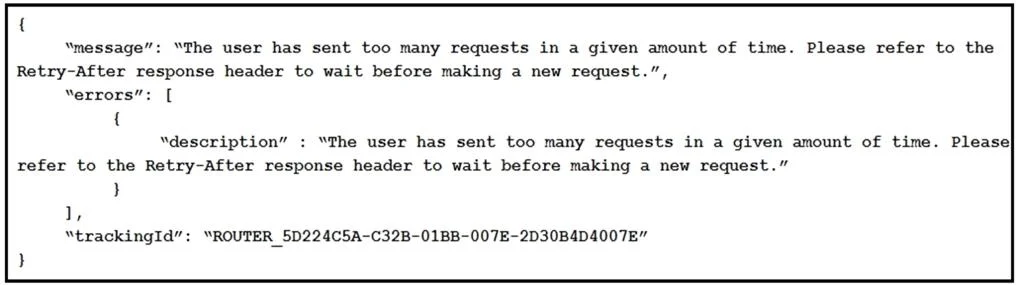
Refer to the exhibit. What is the Webex Teams REST API HTTP response status code, based on this code snippet?
The correct answer is C. 429. Option C (429 - Too Many Requests) is correct because the code snippet demonstrates rate limiting behavior characteristic of the Webex Teams API - when an application sends too many API requests within a given time window, the server responds with 429 and typically includes a…
Question
Exhibit
Options
- A401
- B403
- C429
- D501
How the community answered
(31 responses)- A16% (5)
- B6% (2)
- C74% (23)
- D3% (1)
Explanation
Option C (429 - Too Many Requests) is correct because the code snippet demonstrates rate limiting behavior characteristic of the Webex Teams API - when an application sends too many API requests within a given time window, the server responds with 429 and typically includes a Retry-After header indicating when to resume requests.
Why the distractors are wrong:
- A (401 Unauthorized): This would appear when authentication credentials are missing or invalid - not a rate limiting scenario.
- B (403 Forbidden): This indicates the client is authenticated but lacks permission to access the resource - a different access control issue.
- D (501 Not Implemented): This means the server doesn't support the requested HTTP method - unrelated to API rate limiting.
Memory tip: Think "4-2-9 = Too Many" - if you've made too many requests (like dialing the same number 429 times), you get cut off. The Webex Teams API enforces rate limits to prevent abuse, making 429 the signature response for throttling scenarios on DevNet exams.
Topics
Community Discussion
No community discussion yet for this question.