
300-920 · Question #45
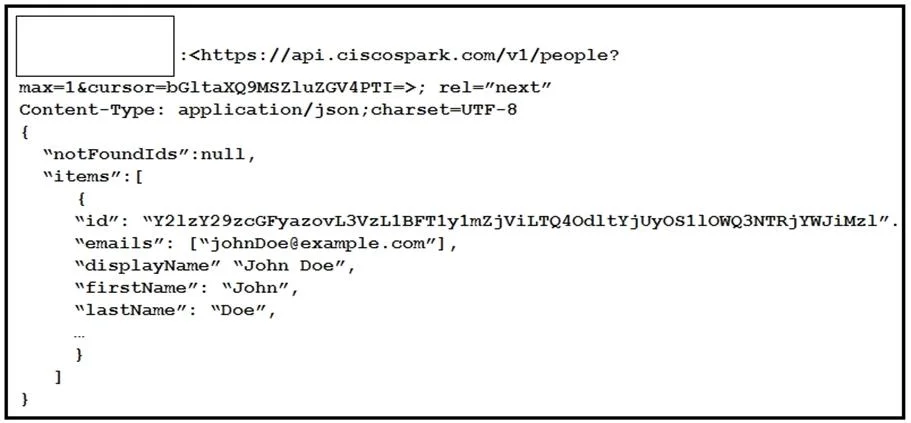
Refer to the exhibit. A Webex Teams REST API response is shown with the HTTP Header missing. Which HTTP header expected in this response?
The correct answer is B. Link. B is correct because the Link HTTP header is the standard mechanism REST APIs use for pagination. When a Webex Teams API returns a paginated result set, the Link header contains URLs with relationship types like rel="next" and rel="prev" so clients can navigate through pages of…
Question
Exhibit
Options
- APush
- BLink
- CPatch
- DPut
How the community answered
(27 responses)- B89% (24)
- C4% (1)
- D7% (2)
Explanation
B is correct because the Link HTTP header is the standard mechanism REST APIs use for pagination. When a Webex Teams API returns a paginated result set, the Link header contains URLs with relationship types like rel="next" and rel="prev" so clients can navigate through pages of data - making it a critical part of any paginated API response.
Why the distractors are wrong:
- A (Push): Not a standard HTTP response header; HTTP/2 Server Push is a protocol feature, not a named header.
- C (Patch): PATCH is an HTTP method (verb), not a header.
- D (Put): PUT is also an HTTP method, not a header.
Memory tip: "The Link header links you to the next page." Any time you see a REST API returning large datasets, think Link: <url>; rel="next" - it's the standard pagination breadcrumb defined in RFC 5988.
Topics
Community Discussion
No community discussion yet for this question.