
MB-310 · Question #234
Drag and Drop Question A company is implementing Microsoft Dynamics 365 Finance. The company is configuring the fixed asset functionality and has the following requirements: - Manually add an…
The correct answer is Bonus; Consumption. Dynamics 365 Finance - Fixed Asset Depreciation Methods --- Placement 1: Machine (first-year additional amount) → Bonus Bonus depreciation in D365 Finance is specifically designed to let you manually post an extra depreciation charge on top of the regular method - typically in…
Question
Exhibit
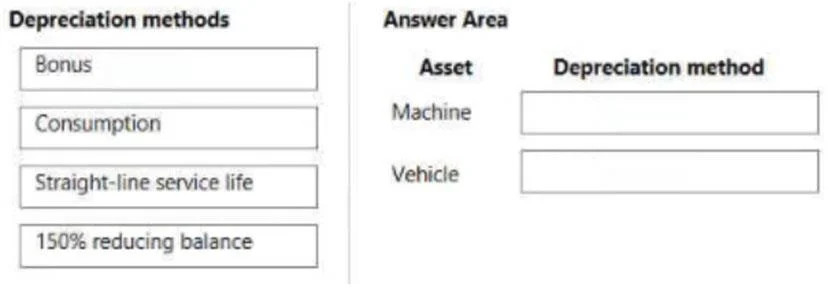
Answer Area
Drag items
Correct arrangement
- Bonus
- Consumption
Explanation
Dynamics 365 Finance - Fixed Asset Depreciation Methods
Placement 1: Machine (first-year additional amount) → Bonus
Bonus depreciation in D365 Finance is specifically designed to let you manually post an extra depreciation charge on top of the regular method - typically in the first year of service. It does not replace the primary depreciation profile; it supplements it as a one-time additional deduction.
This maps directly to the requirement: "Manually add an additional depreciation amount the first year a machine is put in service."
Placement 2: Company Vehicle (miles traveled) → Consumption
Consumption depreciation calculates the depreciation charge based on actual usage - units produced, hours run, or miles traveled - rather than elapsed time. You define the asset's total expected lifetime units and record actual usage each period; D365 calculates the expense proportionally.
This maps directly to the requirement: "Depreciate a company vehicle based on the number of miles it has traveled."
Why the Other Options Are Wrong
| Method | Why it doesn't fit |
|---|---|
| Straight-line service life | Spreads cost evenly over time - no usage tracking, no manual add-on |
| 150% reducing balance | Accelerated time-based method - applies 150% of the straight-line rate to declining book value; still time-based, not usage-based |
Common Mistakes
- Confusing Bonus with 150% reducing balance: Both result in higher early-year depreciation, but 150% RB is automatic and time-based, while Bonus is a manual, supplemental entry - the question's word "manually" is the key signal.
- Using Straight-line for the vehicle: If a company records mileage, straight-line ignores actual usage and will misstate depreciation in high- and low-usage years.
- Thinking Consumption requires special hardware: D365 simply accepts a manual unit entry (e.g., miles driven) per period - no integration required.
Topics
Community Discussion
No community discussion yet for this question.