
CSSGB · Question #88
Explain the purpose of "mistake proofing." Explain the functioning of mistake proofing. Answer: Mistake proofing is used to create "robust steps" in a process or service, or components of a product…
The correct answer is A. Bottom line results. Option A is correct because mistake proofing exists to deliver bottom line results - by eliminating human error from critical process steps, organizations reduce rework, scrap, warranty costs, and liability, all of which directly improve financial performance. In Six Sigma…
Question
Explain the purpose of "mistake proofing." Explain the functioning of mistake proofing. Answer:
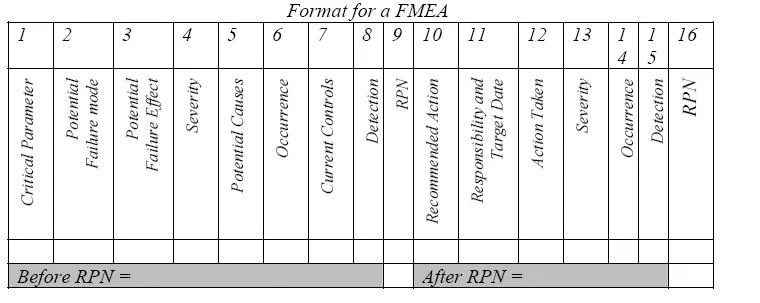
Mistake proofing is used to create "robust steps" in a process or service, or components of a product, denoted as Xs, which are not susceptible to human error. It is used on the critical parameters shown in column 1 in the table below and on the potential failure modes shown in column 2 of the table below. Column 12 in the table below is used to list a mistake proofing solution to potential failure modes (column 2). There are many types of mistake proofing solutions to prevent failure modes, for example, alarms that indicate danger to an operator, color coding medical records by type (green for pediatric and orange for geriatric), or a hand harness for a press to prevent an operator from getting his/her hands crushed in the press. Team members can brainstorm for mistake proofing solutions to potential failure modes, or they can review the literature on mistake proofing techniques.
Exhibit
Options
- ABottom line results
- BMarket share growth
- CDefect reductions
- DCustomer focus
How the community answered
(25 responses)- A76% (19)
- B8% (2)
- C12% (3)
- D4% (1)
Explanation
Option A is correct because mistake proofing exists to deliver bottom line results - by eliminating human error from critical process steps, organizations reduce rework, scrap, warranty costs, and liability, all of which directly improve financial performance. In Six Sigma, every improvement tool ultimately traces back to measurable business impact on the bottom line.
Option B (Market share growth) is a downstream, indirect outcome influenced by many factors beyond mistake proofing; it's too broad and not the stated purpose of the technique.
Option C (Defect reductions) is the mechanism of mistake proofing - what it does operationally - but not its overarching purpose. Defect reduction is the means; bottom line improvement is the end goal.
Option D (Customer focus) is a business philosophy, not the defined purpose of mistake proofing, even though customers benefit indirectly from fewer defects.
Memory tip: Think of the "Poka-Yoke chain" - mistake proofing → prevents defects → reduces waste and costs → hits the bottom line. In Six Sigma, every tool ultimately answers to the CFO, not just the customer.
Topics
Community Discussion
No community discussion yet for this question.