
AZ-500 · Question #381
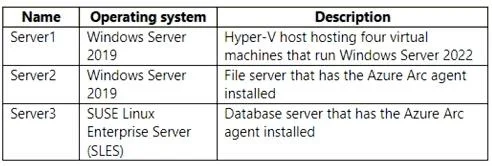
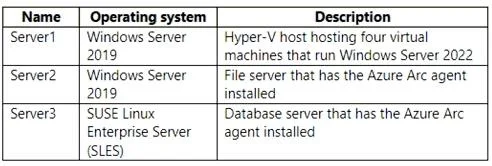
Hotspot Question Your on-premises network contains the servers shown in the following table. You have an Azure subscription that contains multiple virtual machines that run either Windows Server…
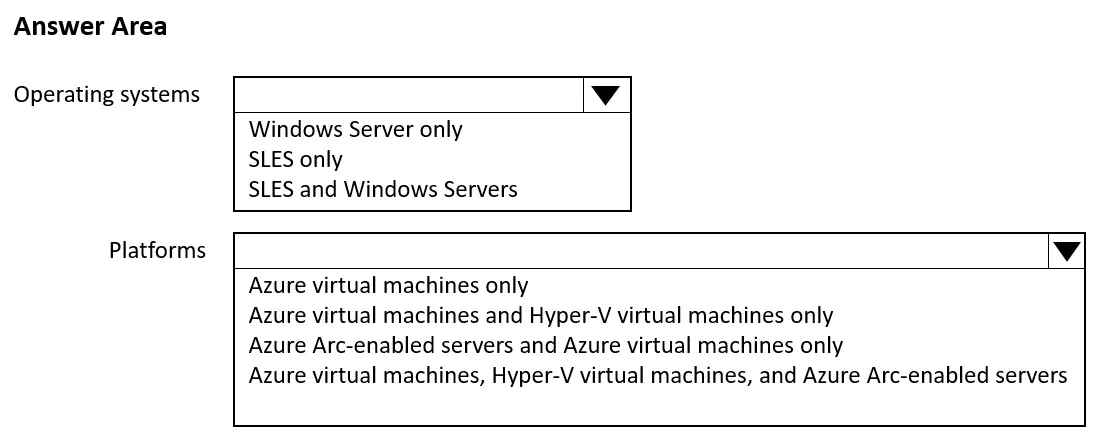
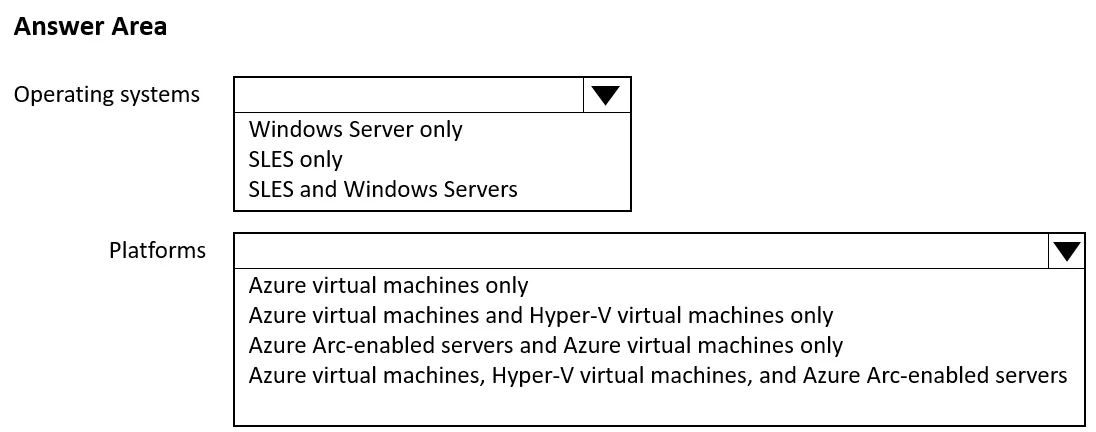
The correct answer is Windows Server 2019 = Yes; SLES = Yes; Windows Server 2022 = No. This hotspot question tests knowledge of which operating systems and platforms are supported by Microsoft Defender for Cloud's Adaptive Application Controls feature, covering both on-premises and Azure-hosted workloads.
Question
Exhibits
Answer Area
- Windows Server 2019Yes
- SLESYes
- Windows Server 2022No
Explanation
This hotspot question tests knowledge of which operating systems and platforms are supported by Microsoft Defender for Cloud's Adaptive Application Controls feature, covering both on-premises and Azure-hosted workloads.
Approach. Adaptive Application Controls in Microsoft Defender for Cloud supports Windows Server (2008 R2 and later) and Linux systems. For on-premises servers, both Windows Server and Linux (including distributions like Ubuntu, Debian, SLES, RHEL, CentOS, and Oracle Linux) are supported when connected via Azure Arc. For Azure virtual machines, Windows Server 2019 is fully supported, and SLES (SUSE Linux Enterprise Server) is also supported as it is a recognized Linux distribution. The key is that on-premises machines must be onboarded via Azure Arc to be monitored, and both Windows and Linux platforms qualify for adaptive application control policies.
Concept tested. Microsoft Defender for Cloud Adaptive Application Controls supported operating systems and platforms - specifically understanding that both Windows Server (2008 R2+) and Linux distributions (including SLES) are supported on Azure VMs, and that on-premises servers connected via Azure Arc are also eligible for monitoring.
Reference. https://learn.microsoft.com/en-us/azure/defender-for-cloud/adaptive-application-controls
Topics
Community Discussion
No community discussion yet for this question.