
AZ-305 · Question #281
Hotspot Question You have an on-premises Microsoft SQL Server database named SQL1. You plan to migrate SQL1 to Azure. You need to recommend a hosting solution for SQL1. The solution must meet the…
This question tests knowledge of Azure SQL hosting options and their high availability/replication features, specifically which service tier and feature supports multiple read-only replicas, automatic replication, and failover within a 15-minute RTO.
Question
Exhibits
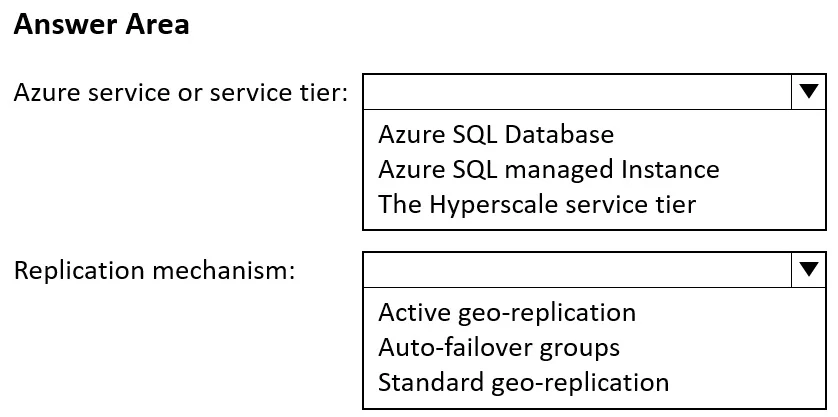
Answer Area
- Azure service or service tier:Azure SQL DatabaseAzure SQL managed InstanceThe Hyperscale service tier
- Replication mechanism:Active geo-replicationAuto-failover groupsStandard geo-replication
Explanation
This question tests knowledge of Azure SQL hosting options and their high availability/replication features, specifically which service tier and feature supports multiple read-only replicas, automatic replication, and failover within a 15-minute RTO.
Approach. The correct solution is Azure SQL Managed Instance with a Business Critical service tier and Auto-failover groups. Business Critical tier supports up to 4 read-only secondary replicas using Always On Availability Groups, provides automatic replication between primary and secondary replicas, and supports auto-failover groups which enable failover with an RTO well within 15 minutes (typically under 30 seconds for planned failovers, and under a few minutes for unplanned). Auto-failover groups handle automatic replication and failover orchestration between the primary and secondary replicas, satisfying all three requirements: multiple secondary read-only replicas, automatic replication, and failover within the 15-minute RTO.
Concept tested. Azure SQL Managed Instance service tiers (General Purpose vs Business Critical), Auto-failover groups, and Always On Availability Groups in Azure - specifically which combination supports multiple readable secondaries, automatic replication, and a defined RTO for failover scenarios during SQL Server migration to Azure.
Topics
Community Discussion
No community discussion yet for this question.