
300-615 · Question #243
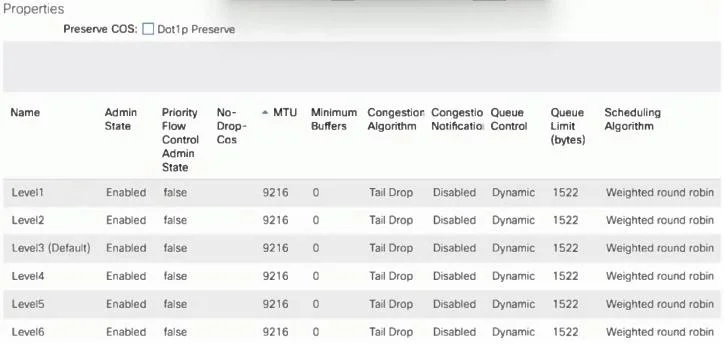
Refer to the exhibit. A Cisco ACI fabric experiences a packet drop for high-priority signaling traffic. Which configuration protects high-priority queues from dropping?
The correct answer is A. Change the scheduling algorithm to strict priority. Strict Priority Scheduling ensures that high-priority traffic is always served before other lower- priority traffic, avoiding packet drops in high-priority queues. In contrast, weighted round-robin (WRR) shares bandwidth between all queues, which can lead to drops for…
Question
Refer to the exhibit. A Cisco ACI fabric experiences a packet drop for high-priority signaling traffic. Which configuration protects high-priority queues from dropping?
Exhibits
Options
- AChange the scheduling algorithm to strict priority.
- BChange the admin state to disabled.
- CChange the scope to fabric-wide PFC.
- DChange the congestion algorithm to WRED.
How the community answered
(25 responses)- A84% (21)
- B4% (1)
- C8% (2)
- D4% (1)
Explanation
Strict Priority Scheduling ensures that high-priority traffic is always served before other lower- priority traffic, avoiding packet drops in high-priority queues. In contrast, weighted round-robin (WRR) shares bandwidth between all queues, which can lead to drops for high-priority traffic if the bandwidth is exhausted. Changing the scheduling algorithm from Weighted Round Robin (WRR) to Strict Priority prioritizes the high-priority queues and prevents drops for critical traffic like signaling.
Topics
Community Discussion
No community discussion yet for this question.