
300-510 · Question #296
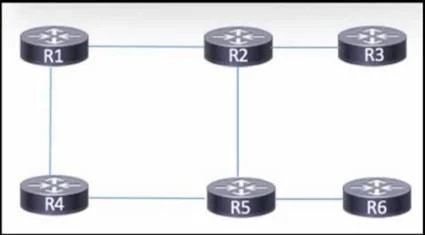
Refer to the exhibit. The network is configured for multicast using PIM-SM. A server connected to R3 streams multicast data to hosts located on R4. To support expected growth in the network, the…
The correct answer is D. Configure R4 to be the RP and mapping agent. For Auto-RP you need at least one RP candidate and one mapping agent. By configuring R4 with both an ip pim rp-candidate (to announce itself as an RP) and ip pim autorp mapping-agent (to collect RP announcements and advertise the RP-to-group mappings), you enable dynamic RP…
Question
Refer to the exhibit. The network is configured for multicast using PIM-SM. A server connected to R3 streams multicast data to hosts located on R4. To support expected growth in the network, the network engineer with an employee ID: 123456789 has decided to implement Auto-RP to dynamically assign a rendezvous point (RP). Which action must be taken?
Exhibit
Options
- AConfigure the interfaces participating in multicast to be in sparse-dense mode
- BConfigure R3 as the BSR mapping agent
- CConfigure each router with a different loopback address to be used as the backup RP.
- DConfigure R4 to be the RP and mapping agent
How the community answered
(31 responses)- A10% (3)
- B16% (5)
- C3% (1)
- D71% (22)
Explanation
For Auto-RP you need at least one RP candidate and one mapping agent. By configuring R4 with both an ip pim rp-candidate (to announce itself as an RP) and ip pim autorp mapping-agent (to collect RP announcements and advertise the RP-to-group mappings), you enable dynamic RP discovery for the whole PIM-SM domain.
Topics
Community Discussion
No community discussion yet for this question.