
300-510 · Question #293
Refer to the exhibit. A network engineer is troubleshooting PIM-SM multicast that connects to multiple domains using MSDP. All BGP neighbors are up. and the devices are able to reach each other. An…
The correct answer is C. Change the MSDP peer address on each MSDP-enabled router to match the MBGP peer address. MSDP advertisements undergo an RPF check against the unicast routing table, so the source IP of each MSDP TCP session must be reachable via the same path that the router would use to send return traffic. By using the same loopback addresses you’ve already established for your…
Question
Refer to the exhibit. A network engineer is troubleshooting PIM-SM multicast that connects to multiple domains using MSDP. All BGP neighbors are up. and the devices are able to reach each other. An additional interface was configured on Router 2 for future use. However, the logs indicate that RPF checks are failing on all of the MSDP-enabled routers. Which action resolves this problem?
Exhibit
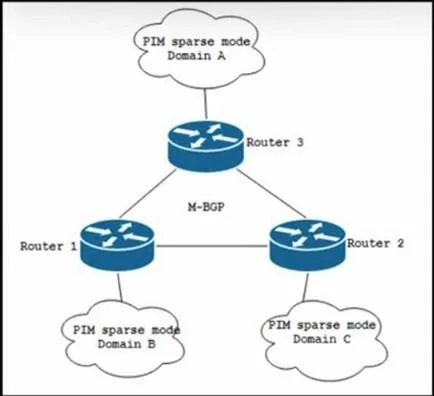
Options
- AEnable TCP port 639 for MSDP between the routers.
- BChange the MSDP peer address on all the MSDP routers to the multicast address and join the
- CChange the MSDP peer address on each MSDP-enabled router to match the MBGP peer address
- DEnable UDP port 639 for MSDP between the routers.
How the community answered
(62 responses)- A10% (6)
- B6% (4)
- C81% (50)
- D3% (2)
Explanation
MSDP advertisements undergo an RPF check against the unicast routing table, so the source IP of each MSDP TCP session must be reachable via the same path that the router would use to send return traffic. By using the same loopback addresses you’ve already established for your M- BGP peers (and sourcing MSDP from that loopback), you guarantee that the MSDP source is found correctly in the RIB - eliminating the RPF failures.
Topics
Community Discussion
No community discussion yet for this question.