
300-510 · Question #190
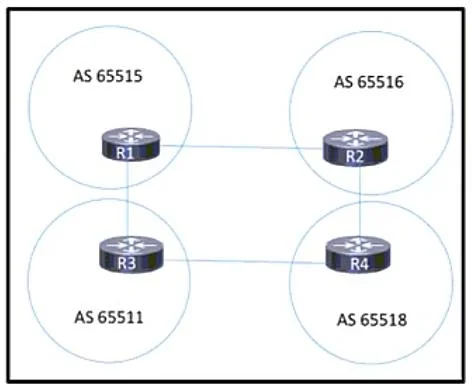
Refer to the exhibit. Routers R1, R2, R3, and R4 are peer routers that reside in different administrative domains. PIM-SM is running in each autonomous system, and EBGP is configured between the…
The correct answer is D. Set the same MSDP password on both peers. MSDP (Multicast Source Discovery Protocol) uses TCP port 639 to establish peering sessions between PIM-SM domains. When MSDP authentication is configured, both peers must use identical passwords for the TCP session to be established. If one peer has a password set and the other…
Question
Refer to the exhibit. Routers R1, R2, R3, and R4 are peer routers that reside in different administrative domains. PIM-SM is running in each autonomous system, and EBGP is configured between the peers. A network administrator has just implemented MSDP between the connected peers. When the administrator enabled the MSDP configuration, R1 and R2 failed to establish a peering relationship. All other connected routers successfully established peering sessions. Which action must the engineer take to resolve the issue between R1 and R2?
Exhibit
Options
- AImplement BGP authentication between the peers.
- BConfigure the peers to be in the same autonomous system.
- CChange the MSDP authentication method to clear text.
- DSet the same MSDP password on both peers.
How the community answered
(38 responses)- A5% (2)
- B3% (1)
- C3% (1)
- D89% (34)
Explanation
MSDP (Multicast Source Discovery Protocol) uses TCP port 639 to establish peering sessions between PIM-SM domains. When MSDP authentication is configured, both peers must use identical passwords for the TCP session to be established. If one peer has a password set and the other has a different password (or no password at all), the TCP handshake fails due to an MD5 authentication mismatch, preventing the MSDP peering session from coming up. Since all other router pairs succeeded except R1–R2, the most likely cause is that these two routers have mismatched MSDP passwords. Option A is incorrect because BGP authentication is separate from MSDP authentication. Option B is wrong because MSDP is specifically designed to work across different autonomous systems. Option C is a distractor since MSDP uses MD5 authentication, not a selectable method. Setting the same MSDP password on both R1 and R2 resolves the authentication mismatch and allows the peering session to establish.
Topics
Community Discussion
No community discussion yet for this question.