
300-510 · Question #114
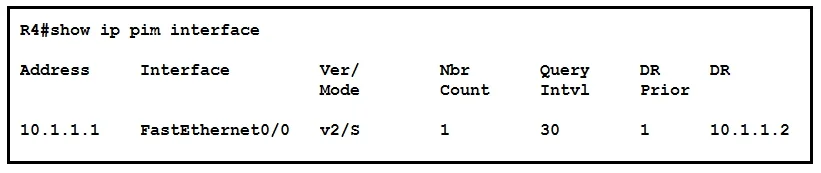
Refer to the exhibit. Which two commands must the engineer configure for the company's PIM- PIM network to enable Auto-RP mappings to be sent over the FastEthernet0/0 interface without affecting…
The correct answer is A. enable auto-rp listener B. enable sparse-dense mode. Auto-RP requires multicast to distribute RP mappings, but PIM Sparse Mode needs an RP to forward multicast - a classic chicken-and-egg problem. Option B (sparse-dense mode) solves this by treating Auto-RP's well-known groups (224.0.1.39 and 224.0.1.40) with dense-mode flooding…
Question
Refer to the exhibit. Which two commands must the engineer configure for the company's PIM- PIM network to enable Auto-RP mappings to be sent over the FastEthernet0/0 interface without affecting normal operation? (Choose two)
Exhibit
Options
- Aenable auto-rp listener
- Benable sparse-dense mode
- Cenable sparse-mode
- Denable Auto-RP announcements
- Eenable dense mode
How the community answered
(21 responses)- A71% (15)
- C5% (1)
- D5% (1)
- E19% (4)
Explanation
Auto-RP requires multicast to distribute RP mappings, but PIM Sparse Mode needs an RP to forward multicast - a classic chicken-and-egg problem. Option B (sparse-dense mode) solves this by treating Auto-RP's well-known groups (224.0.1.39 and 224.0.1.40) with dense-mode flooding while keeping all other groups in sparse mode, and Option A (auto-rp listener) ensures the router actively processes and forwards those Auto-RP messages - together they break the deadlock without disrupting normal sparse-mode operation.
Why the distractors fail:
- C (sparse-mode only) blocks Auto-RP messages immediately - no RP is known yet for those groups, so they're dropped, recreating the exact problem you're trying to solve.
- D (Auto-RP announcements) configures a router to advertise itself as an RP candidate, which is the wrong role - the question asks about receiving and distributing mappings.
- E (dense mode only) floods all multicast everywhere, which does affect normal operation by wasting bandwidth across the entire network.
Memory tip: Think "Auto-RP needs a Bridge" - the Autorp listener hears the messages, and sparse-dense mode acts as the Bridge that lets dense flooding handle only the Auto-RP groups while sparse mode handles everything else normally.
Topics
Community Discussion
No community discussion yet for this question.