
NSE4_FGT-7.0 · Question #90
Refer to the exhibit. Which contains a network diagram and routing table output. The Student is unable to access Webserver. What is the cause of the problem and what is the solution for the problem?
The correct answer is D. The first packet sent from Student failed the RPF check. This issue can be resolved by adding a. The problem occurs because the first packet sent from the Student fails the Reverse Path Forwarding (RPF) check, which prevents the connection from being established with the Webserver.
Question
Refer to the exhibit. Which contains a network diagram and routing table output. The Student is unable to access Webserver. What is the cause of the problem and what is the solution for the problem?
Exhibit
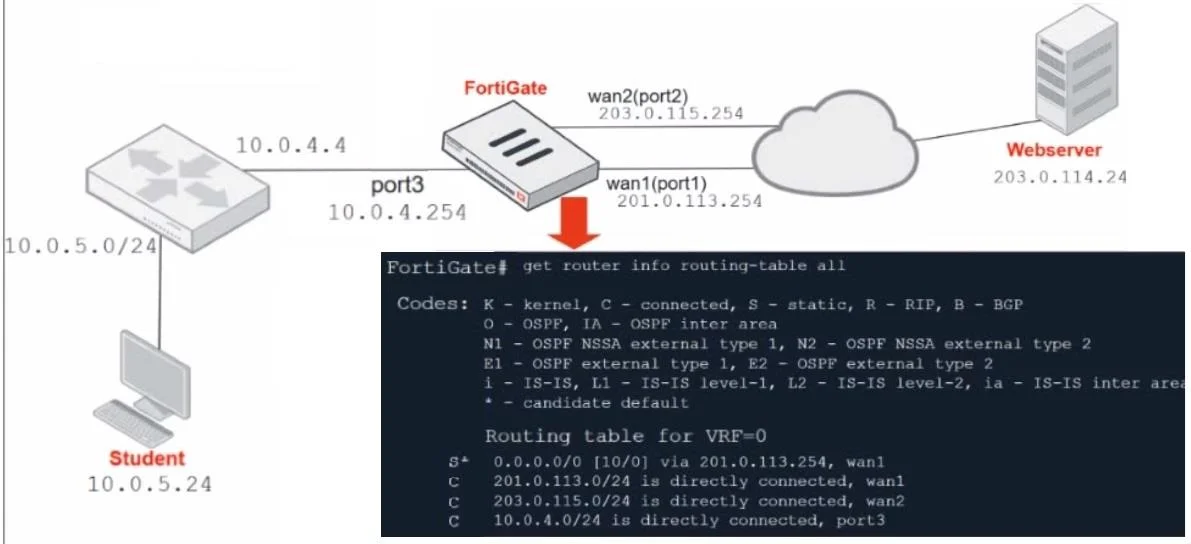
Options
- AThe first packet sent from Student failed the RPF check. This issue can be resolved by adding a
- BThe first reply packet for Student failed the RPF check. This issue can be resolved by adding a
- CThe first reply packet for Student failed the RPF check. This issue can be resolved by adding a
- DThe first packet sent from Student failed the RPF check. This issue can be resolved by adding a
How the community answered
(19 responses)- A26% (5)
- B11% (2)
- C5% (1)
- D58% (11)
Why each option
The problem occurs because the first packet sent from the Student fails the Reverse Path Forwarding (RPF) check, which prevents the connection from being established with the Webserver.
While choice A correctly identifies the RPF failure of the initial student packet as the cause, its proposed solution (which is truncated) must be technically incorrect or insufficient to resolve the problem effectively compared to the solution in choice D.
The issue preventing the student from *accessing* the webserver typically originates with the initial outbound connection attempt failing RPF on its source, not the reply packet from the server.
The problem of a student being unable to *access* a webserver is more commonly due to an RPF failure on the initial packet sent by the student, rather than the reply packet from the webserver.
The Reverse Path Forwarding (RPF) check is performed on incoming packets to validate that the packet's source IP address has a valid and optimal return path in the router's forwarding table via the ingress interface. If the first packet from the Student fails this check due to misconfiguration or spoofing, it is dropped, preventing any further communication and thus access to the Webserver.
Concept tested: Reverse Path Forwarding (RPF) mechanism troubleshooting
Source: https://www.cisco.com/c/en/us/td/docs/ios-xml/ios/ipaddr_nat/configuration/xe-16/ipnat-xe-16-book/iad-rev-path-fwd.html
Topics
Community Discussion
No community discussion yet for this question.