
MB-920 · Question #149
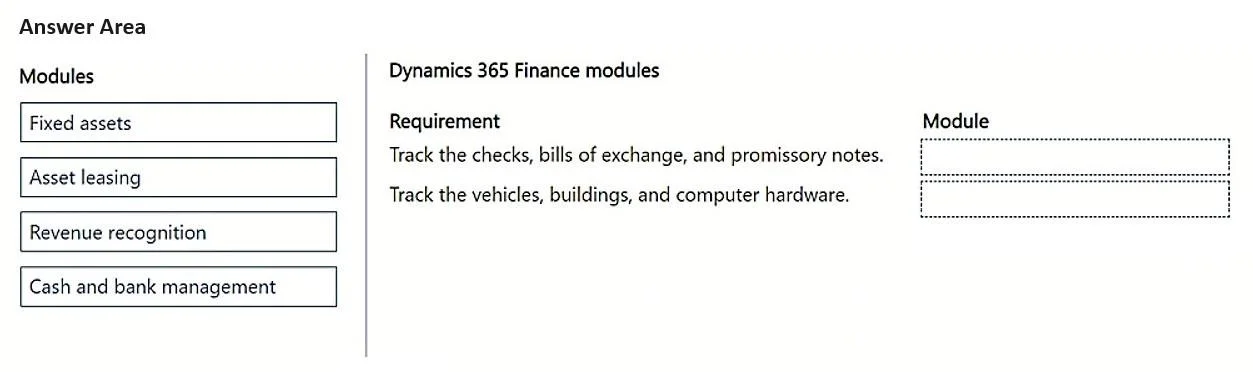
Drag and Drop Question A company is evaluating using Dynamics 365 Finance. The company must itemize all vehicles, buildings, and computer hardware that were purchased and paid for to maintain…
This question tests knowledge of Dynamics 365 Finance module responsibilities, specifically which module handles long-term physical asset tracking versus which handles payment instrument management. The correct mapping is Fixed Assets for tangible capital items and Accounts…
Question
Exhibit
Explanation
This question tests knowledge of Dynamics 365 Finance module responsibilities, specifically which module handles long-term physical asset tracking versus which handles payment instrument management. The correct mapping is Fixed Assets for tangible capital items and Accounts Payable for negotiable payment instruments.
Approach. The Fixed Assets module is designed precisely to record, track, and depreciate long-term tangible capital assets such as vehicles, buildings, and computer hardware - items that are purchased and held to support ongoing operations rather than resold. The Accounts Payable module manages all vendor-related payment activities, including negotiable instruments like checks, bills of exchange (drafts drawn on a debtor), and promissory notes (written promises to pay) - all of which represent ways a company formally commits to paying for purchased goods. The distinction is asset lifecycle management (Fixed Assets) versus payment method/instrument tracking (Accounts Payable). Both modules may interact during the acquisition workflow - AP processes the payment, while Fixed Assets records what was acquired.
Concept tested. Dynamics 365 Finance module functional scope: Fixed Assets module for capital asset itemization and lifecycle tracking vs. Accounts Payable module for vendor payment instruments (checks, bills of exchange, promissory notes)
Reference. Microsoft Learn - Dynamics 365 Finance: 'Fixed assets overview' and 'Accounts payable overview'; MB-310 exam domain: Configure and use cash and bank management, and related modules
Topics
Community Discussion
No community discussion yet for this question.