Question
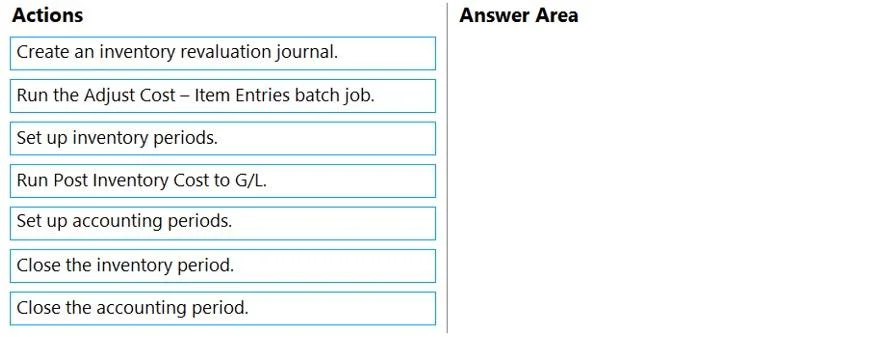
Case Study 2 - Deliveries Current environment Deliveries The company receives daily truckloads of products from their vendors, warehouses the products briefly, and then ships orders based on a weekly delivery cycle to each customer's store. Customers have regular standing orders that are revised and finished one week prior to delivery. Best for You Organics has a fleet of trucks that make deliveries according to planned routes. The company also has a floating route for trucks to deliver rush orders. The route is being used more often by customers and has overwhelmed the warehouse with exception processing. Duties The company wants to provide greater separation of duties between activities in the office and activities in the warehouse. The accounting team enters orders for the sales team, sends pick tickers back to the warehouse, and organizes shipping documents. The accounting team invoices the orders when they receive instructions from the warehouse that an order shipped. Employees have expressed frustration because they need to work longer hours to accommodate the increase in sales. The company does not use the Advanced Warehousing function. Requirements Salespeople Salespeople must be able to manage opportunities that are converted to quotes. Salespeople must be able to release orders to the warehouse to be fulfilled once a quote is final. Salespeople must be trained on how to determine if inventory is available when they are completing the quote to avoid promising inventory that is not on hand because all orders are processed one week in advance of delivery. Team responsibilities Deliveries must be shipped daily by employees in the warehouse. The office must be responsible for completing the invoicing process. The current team responsibilities are shown in the following graphic: The required team responsibilities are shown in the following graphic: Vendor management The company contracts with each vendor for regular discounts at the invoice level. The company requires a pre-set discount percentage to calculate automatically when the purchaser completes a purchase order. The company must be able to see a copy of the completed purchase order in the system when they have new contract negotiations with their vendors. Customer and inventory management Sales invoices must be automatically emailed by the system to customers. A template must be used for emails sent to customers. The template must not be altered. Customers who pre-pay their invoices must not receive a copy of their invoices. The company warehouses all products as Case quantities. The company has difficulty recording accurate costs for product returns. The company wants to expand their capabilities for managing returns by setting up all inventory in a quantity of Each. Reporting The company must be able to answer two key questions when they report financial results: Which customers are buying which items? Which salespeople are selling in which regions? When discussing customers, the company must refer to each Customer Group as follows: Big Box Franchise Private When discussing items, the company must refer to each Item Group as follows: Fair Trade Free Range Grass Fed Heirloom Organic Salesperson names that must be used are: SalespersonA SalespersonB SalespersonC SalespersonD Region names that must be used are: North South East West Commission The company must be able to track salesperson performance within certain regions to calculate commission. Each salesperson must be assigned only to a single region. This commission data is currently recorded inconsistently, resulting in incorrect combinations that require manual correction. The company must have some level of automation to manage this. Issues Issue 1 The accounting team needs an improved process for reconciling inventory to the general ledger. Posted transactions are changing financial reporting in periods that have been closed. Unexpected changes in inventory cost for previous months are causing costing inaccuracies. The system must restrict the adjustment of costs for closed months. The new policy will be to restrict all users to posting in the current month only, with the exception of a few employees from the accounting team. The calendar fiscal year for company must begin on June 1. Issue 2 The accounting team uses a complex manual accrual process to determine the accounting impact of items received but not invoiced. The system must streamline the item accrual process. Issue 3 The company often receives a higher quantity of produce items than what they order because vendors allow for spoilage or damage of produce in transit. The company does not want to allow over receipt on non-produce items. Issue 4 The company has received comments from their auditors that invoices are not being properly compared to received inventory documents before they are posted. The company does not use warehouse management and always handles processes directly from the purchase order. The company always has the following documents: purchase order from the procurement department receiving document from the warehouse electronic invoice from the vendor Drag and Drop Question You need to configure the system to address the costing adjustment concerns. Which four actions should you perform in sequence? To answer, move the appropriate actions from the list of actions to the answer area and arrange them in the correct order. Answer:
Explanation
Analysis of This Drag-and-Drop Question
Important Observation: Mismatch in the Question as Presented
There is a significant problem with this question as you've shared it. Let me break it down:
The question asks: Configure the system to address costing adjustment concerns (Issue 1 - restricting posting to closed periods, setting fiscal year start to June 1).
The available items are: Actions related to sales order/quote management (Item Availability, Requested Delivery Date, Make Order, Release, etc.).
The stated correct arrangement shows only 2 items, despite the question requiring 4 actions in sequence.
This indicates the question content you received is incomplete or mixed from two different drag-and-drop questions in the same exam case study.
What the Costing Adjustment Question (Issue 1) Should Actually Cover
In Dynamics 365 Business Central, addressing Issue 1 requires:
| Step | Action | Why |
|---|
| 1 | Set up Inventory Periods | Creates closeable accounting periods for inventory |
| 2 | Close the Inventory Period | Locks the period to prevent backdated cost adjustments |
| 3 | Set Allow Posting From/To dates in GL Setup | Restricts all users to current month posting |
| 4 | Grant exceptions to specific accounting team users | Allows the few exempted employees to post to prior periods |
None of the available items listed match these steps - confirming the available items belong to a different drag-and-drop question in the case study.
What the Available Items Actually Answer
The available items (Item Availability by Periods, Make Order, Release, Requested Delivery Date, etc.) map to the Salesperson Requirements section:
"Salespeople must be trained on how to determine if inventory is available when completing the quote..."
"Salespeople must be able to release orders to the warehouse once a quote is final."
The correct 4-step sequence for that scenario would likely be:
- View the Item Availability by Periods - Check if inventory is available for the delivery week
- Change the Requested Delivery Date - Adjust the date if stock isn't available for the original date
- Choose Make Order - Convert the finalized quote into a sales order
- Choose Release - Release the order to the warehouse for fulfillment
Explaining the Two Items Actually Listed
1. Change the Requested Delivery Date
- Why first: Before committing an order, the salesperson must confirm inventory is available. If not available on the originally requested date, the delivery date must be adjusted - this happens before the order is locked and sent downstream.
- Common mistake: Skipping this step and releasing an order with a date that has no inventory available, violating the requirement to avoid promising inventory not on hand.
2. Choose Release
- Why last: Releasing is the final action that moves the order from the office/sales domain to the warehouse for fulfillment. It locks the order for picking. Nothing downstream can happen until Release is chosen.
- Common mistake: Releasing before verifying inventory availability, or thinking invoicing happens at this stage (it doesn't - invoicing stays with the accounting office per the separation of duties requirement).
Summary
The question as presented has a content error - the scenario describes Issue 1 (costing), but the answer pool and partial answer belong to the salesperson workflow question. When you see this on the actual exam, the costing question will have options like Inventory Periods, Close Period, General Ledger Setup, and User Setup - not sales order actions.