
Microsoft
MB-335 · Question #187
Drag and Drop Question You are the production supervisor at a manufacturing company. You are in the process of configuring the production control module and its parameters. A company plans to use…
Sign in or unlock MB-335 to reveal the answer and full explanation for question #187. The question stem and answer options stay visible for context.
Configure production control
Question
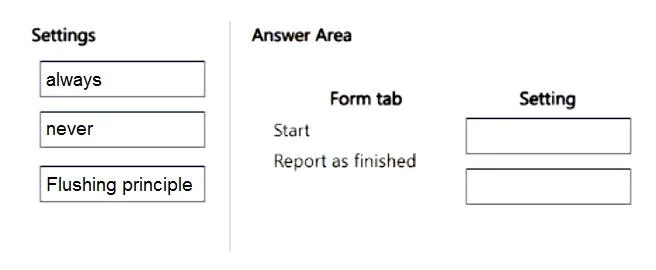
Drag and Drop Question You are the production supervisor at a manufacturing company. You are in the process of configuring the production control module and its parameters. A company plans to use manufacturing execution. Bill of materials (BOM) item consumption must be generated when items are reported at the operation level. You need to configure the Manufacturing execution production order defaults form to allow for backflushing on operations. How should you set up Automatic BOM consumption? To answer, drag the appropriate setting to the correct targets. Each source may be used once, more than once, or not at all. You may need to drag the split bar between panes or scroll to view content. NOTE: Each correct selection is worth one point. Answer:
Exhibit
Answer Area
Drag items
alwaysneverFlushing principle
Unlock MB-335 to see the answer
You've previewed enough free MB-335 questions. Unlock MB-335 for full answers, explanations, the timed quiz mode, progress tracking, and the master PDF. Question stem and options stay visible so you can still see what's on the exam.
Topics
#manufacturing execution#backflushing#BOM consumption#production order defaults