
JN0-480 · Question #41
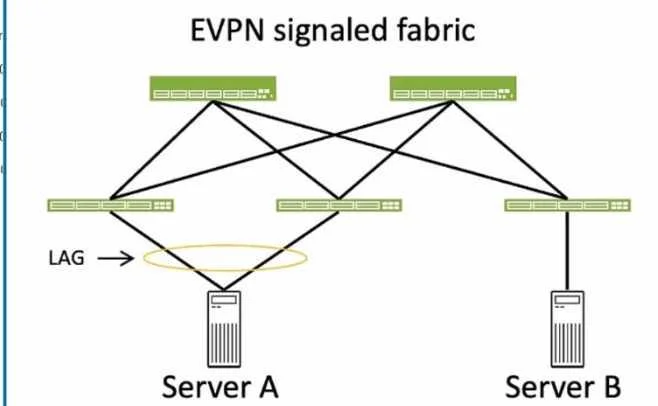
Which two statements about ESI values are correct for the server connections to the fabric shown in the exhibit? (Choose two.)
The correct answer is C. A valid ESI value for Server A is 0x00.10.10.10.10.10.10.10.10.10. D. A valid ESI value for Server B is 0x00.00.00.00.00.00.00.00.00.00. To answer this question, we need to understand the concept of ESI values in EVPN LAGs. An ESI is a 10-byte value that identifies an Ethernet segment, which is a set of links that connect a multihomed device (such as a server) to one or more PE devices (such as leaf switches) in…
Question
Which two statements about ESI values are correct for the server connections to the fabric shown in the exhibit? (Choose two.)
Exhibit
Options
- AA valid ESI value for Server A is 0x00.00.00.00.00.00.00.00.00.00.
- BA valid ESI value for Server B is 0x00.20.20.20.20.20.20.20.20.20.
- CA valid ESI value for Server A is 0x00.10.10.10.10.10.10.10.10.10.
- DA valid ESI value for Server B is 0x00.00.00.00.00.00.00.00.00.00.
How the community answered
(51 responses)- A6% (3)
- B10% (5)
- C84% (43)
Explanation
To answer this question, we need to understand the concept of ESI values in EVPN LAGs. An ESI is a 10-byte value that identifies an Ethernet segment, which is a set of links that connect a multihomed device (such as a server) to one or more PE devices (such as leaf switches) in an EVPN network. The same ESI value must be configured on all the PE devices that connect to the same Ethernet segment. This allows the PE devices to form an EVPN LAG, which supports active-active or active-standby multihoming for the device. The ESI value can be manually configured (type 0) or automatically derived from LACP (type 1) or other methods. In the exhibit, Server A is connected to two leaf switches (QFX 5210) using a LAG with LACP enabled. Server B is connected to three leaf switches (QFX 5120) using a LAG with LACP enabled.
Topics
Community Discussion
No community discussion yet for this question.