
Juniper
JN0-480 · Question #30
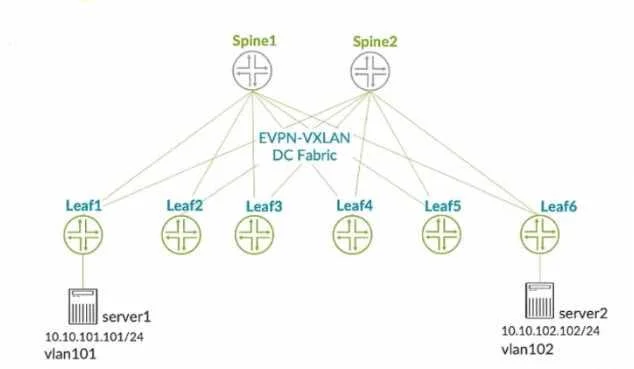
You connect two single-homed servers using Juniper Apstra as shown in the exhibit. You are using the ERB design blueprint with two virtual networks in a common routing zone. In this scenario, which…
Sign in or unlock JN0-480 to reveal the answer and full explanation for question #30. The question stem and answer options stay visible for context.
Ethernet VPN (EVPN)
Question
You connect two single-homed servers using Juniper Apstra as shown in the exhibit. You are using the ERB design blueprint with two virtual networks in a common routing zone. In this scenario, which two types of VXLAN tunnels will be automatically created by the EVPN control plane? (Choose two.)
Exhibit
Options
- AEVPN signaled route Type-8 VXLAN tunnels
- BEVPN signaled route Type-3 VXLAN tunnels
- CEVPN signaled route Type-6 VXLAN tunnels
- DEVPN signaled route Type-2 VXLAN tunnels
Unlock JN0-480 to see the answer
You've previewed enough free JN0-480 questions. Unlock JN0-480 for full answers, explanations, the timed quiz mode, progress tracking, and the master PDF. Question stem and options stay visible so you can still see what's on the exam.
Topics
#EVPN route types#VXLAN tunnels#ERB design#EVPN control plane