
HPE0-S52 · Question #57
Drag and Drop Question Match the SSD drive type to the intended workload. Select and Place: Correct Answer: Section: (none) Explanation Explanation/Reference:
The correct answer is high I/O applications requiring balanced performance; online transaction processing; web servers. Note on Question Completeness This question appears incomplete as provided - it says "Match the SSD drive type to the intended workload," but the SSD drive types (the drop targets/categories) are missing. Only the workloads are listed. The arrangement shown is just the…
Question
Drag and Drop Question Match the SSD drive type to the intended workload. Select and Place:
Correct Answer:
Section: (none) Explanation Explanation/Reference:
Exhibit
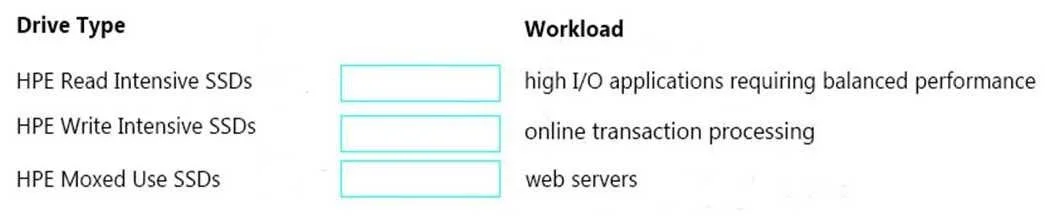
Answer Area
Drag items
Correct arrangement
- high I/O applications requiring balanced performance
- online transaction processing
- web servers
Explanation
Note on Question Completeness
This question appears incomplete as provided - it says "Match the SSD drive type to the intended workload," but the SSD drive types (the drop targets/categories) are missing. Only the workloads are listed. The arrangement shown is just the workloads in their original order.
This is most likely an AWS EBS (Elastic Block Store) volume type question. Here's the standard mapping based on the workloads listed:
Most Likely Intended Mapping
| SSD Type | Workload |
|---|---|
| gp2 / gp3 (General Purpose SSD) | high I/O applications requiring balanced performance |
| io1 / io2 (Provisioned IOPS SSD) | online transaction processing |
| Magnetic (Standard) or st1 | web servers |
Explanation of Each Placement
1. gp2/gp3 → High I/O apps requiring balanced performance General Purpose SSDs offer a balance of price and performance (3,000–16,000 IOPS). They suit diverse workloads that need solid I/O without extreme latency guarantees.
2. io1/io2 → Online Transaction Processing (OLTP) OLTP workloads (e.g., relational databases) demand consistently low latency and high IOPS. Provisioned IOPS volumes let you specify exact IOPS (up to 64,000), making them the right fit.
3. Magnetic/st1 → Web servers Web servers are typically read-heavy with low I/O intensity. Lower-cost storage tiers handle this adequately without needing premium SSD performance.
Common Misconceptions
- Confusing gp2 and io1 - both are SSDs, but io1 is for guaranteed, sustained high IOPS, not just "high."
- Thinking web servers need premium storage - they usually don't, making them the cheapest tier match.
Recommendation: Retrieve the original question source to confirm which SSD types occupy positions 1–3 on the drop targets.
Topics
Community Discussion
No community discussion yet for this question.