
DP-100 · Question #136
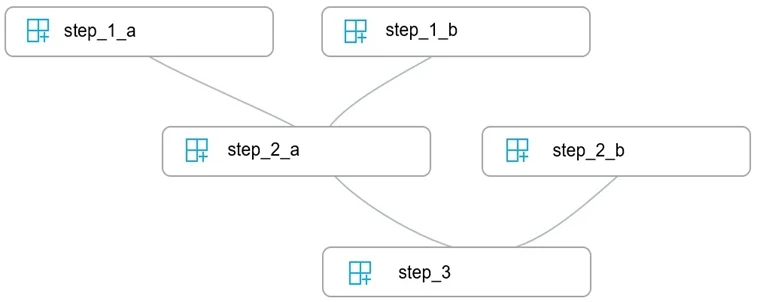
You write five Python scripts that must be processed in the order specified in Exhibit A - which allows the same modules to run in parallel, but will wait for modules with dependencies. You must…
The correct answer is A. p = Pipeline(ws, steps=[[[step_1_a, step_1_b], step_2_a], step_2_b], step_3]). The Azure ML Pipeline SDK supports nested lists to express dependencies: items in the same inner list run in parallel, and outer nesting implies sequential execution. Option A uses steps=[[[step_1_a, step_1_b], step_2_a], step_2_b], step_3] to express that step_1_a and step_1_b…
Question
Exhibits
Options
- Ap = Pipeline(ws, steps=[[[step_1_a, step_1_b], step_2_a], step_2_b], step_3])
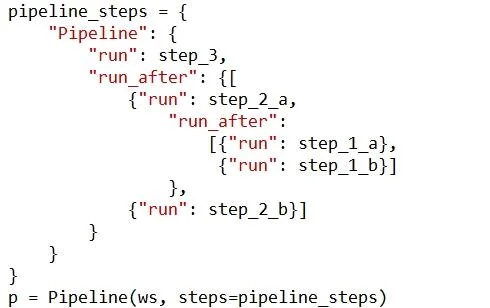
- BPipeline_steps = { "pipeline": { "run": "step_3", "run_after": [{ "run": "step_2_a", "run_after": [ {"run": "step_1_a"}, {"run": "step_1_b"} ] }], {"run": "step_2_b"}] } }
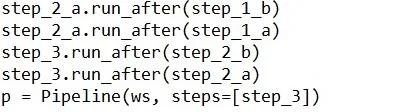
- Cp = Pipeline(ws, steps=pipeline_steps) step_2_a.run_after(step_1_a) step_2_a.run_after(step_1_b) step_2_run_after(step_2_b) step_3.run_after(step_2_a) p = Pipeline(ws, steps=[step_3])
- Dp = Pipeline(ws, steps=[step_1_a, step_1_b, step_2_a, step_2_b, step_3])
How the community answered
(62 responses)- A79% (49)
- B13% (8)
- C2% (1)
- D6% (4)
Explanation
The Azure ML Pipeline SDK supports nested lists to express dependencies: items in the same inner list run in parallel, and outer nesting implies sequential execution. Option A uses steps=[[[step_1_a, step_1_b], step_2_a], step_2_b], step_3] to express that step_1_a and step_1_b run in parallel, step_2_a follows them, step_2_b follows after, and step_3 runs last. Option B uses JSON-like syntax that is not valid Python SDK code. Option C uses run_after() correctly in concept but contains a syntax error (step_2_run_after missing a dot). Option D passes all steps as a flat list with no dependency information.
Topics
Community Discussion
No community discussion yet for this question.