
CBAP · Question #417
An insurance company wants to increase sales by 15% and customer retention by 10% within 1 calendar year. Various strategies to achieve this were considered and a restructure to the existing pricing…
The correct answer is D. Sales - 18 months; Retention - 1 year. Under the layered discount model, retention improvements respond faster to pricing incentives than new-customer sales growth, making the 1-year retention target achievable while the 15% sales increase realistically requires 18 months.
Question
An insurance company wants to increase sales by 15% and customer retention by 10% within 1 calendar year. Various strategies to achieve this were considered and a restructure to the existing pricing model is selected to help achieve these goals. A business analyst (BA) works with stakeholders such as actuaries, product specialists, sales staff, risk managers, and underwriters who agree to applying varying levels of discounts to customers based on:
- Total annual premium the customer has with the company (Financial worth)
- Time with the insurance company (Loyalty)
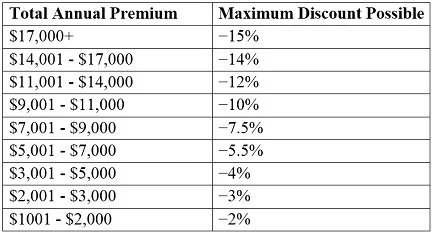
Various financial models are considered but the stakeholders agree that an initial applicable discount is determined based on the customer's overall premium:
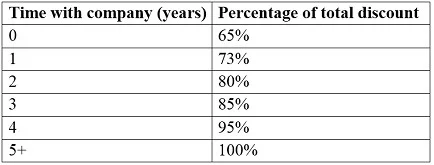
The percentage of the maximum possible discount available to the customer is adjusted based on time with the company:
If within the first six months, customer retention increased by 5 % and sales increased by 6%, then when will the desired sales and retention goals be achieved assuming the trend continues at the same pace?
Exhibits
Options
- ASales - 2 years; Retention - 18 months
- BSales - 3 years; Retention - 1 year
- CSales - 2.5 years; Retention - 2 years
- DSales - 18 months; Retention - 1 year
How the community answered
(34 responses)- A6% (2)
- B12% (4)
- C3% (1)
- D79% (27)
Why each option
Under the layered discount model, retention improvements respond faster to pricing incentives than new-customer sales growth, making the 1-year retention target achievable while the 15% sales increase realistically requires 18 months.
Assigning 2 years for sales and 18 months for retention overstates the time needed for retention gains, which respond more quickly to discount incentives than new-customer acquisition does.
Assigning 3 years for sales greatly overestimates the timeline given the pricing model's direct market incentives and the clearly defined 1-year strategic planning horizon.
Assigning 2.5 years for sales and 2 years for retention far exceeds what the discount model supports and is inconsistent with the urgency of the stated business objectives.
Retention improvements (10%) can be achieved within 1 year because loyalty discounts immediately incentivize existing customers to stay, producing measurable results within the stated calendar year. Sales growth (15%) requires attracting and converting new customers, a longer acquisition cycle that extends the payback period to approximately 18 months under the proposed discount-tiered pricing structure.
Concept tested: Business outcome timeline modeling with discount pricing
Source: https://www.iiba.org/career-resources/a-business-analysis-body-of-knowledge/
Topics
Community Discussion
No community discussion yet for this question.