
70-663 · Question #70
You have an Exchange Server 2010 organization. An Edge Transport server sends and receives all e-mail messages You notice that some servers on the Internet identify e-mail messages from your…
The correct answer is B. Create SenderID TXT records for the Edge Transport servers. In Exchange 2010, Sender ID makes spoofing more difficult. When you enable Sender ID, each message contains a Sender ID status in the metadata of the message. When an e- mail message is received, the Edge Transport server queries the sender's DNS server to verify that the IP…
Question
You have an Exchange Server 2010 organization. An Edge Transport server sends and receives all e-mail messages You notice that some servers on the Internet identify e-mail messages from your organization as spam. You need to minimize the possibility that e-mail messages send from your organization are identified as spam. What should you do?
Exhibit
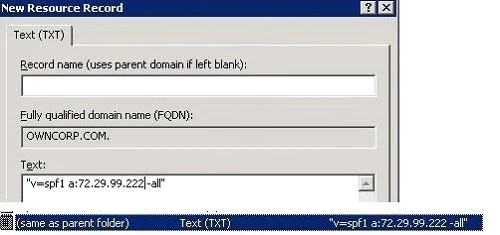
Options
- AImplement Microsoft Forehead Security for Exchange Server.
- BCreate SenderID TXT records for the Edge Transport servers.
- CConfigure the Edge Transport servers to use a real-time block list (RBL).
- DInstall a server certificate from a trusted third-party certification authority (CA).
How the community answered
(28 responses)- A4% (1)
- B75% (21)
- C7% (2)
- D14% (4)
Explanation
In Exchange 2010, Sender ID makes spoofing more difficult. When you enable Sender ID, each message contains a Sender ID status in the metadata of the message. When an e- mail message is received, the Edge Transport server queries the sender's DNS server to verify that the IP address from which the message was received is authorized to send messages for the domain that's specified in the message headers. The IP address of the authorized sending server is referred to as the purported responsible address (PRA). SPF records identify authorized outbound e-mail servers. If an SPF record is configured on the sender's DNS server, the Edge Transport server parses the SPF record and determines whether the IP address from which the message was received is authorized to send e-mail on behalf of the domain that's specified in the message. The Edge Transport server updates the message metadata with the Sender ID status based on the SPF record. After the Edge Transport server updates the message metadata, the Edge Transport server delivers the message as it ordinarily would.
Topics
Community Discussion
No community discussion yet for this question.