
70-663 · Question #10
Your company has three offices. An Active Directory site named Site1, Site2 and Site3 exists for each office. You have an Exchange Server 2010 organization. You deploy Exchange Server 2010 server…
The correct answer is B. Create a new routing group connector and modify the default routing group connector. To coexist you will need to create a routing group connector on the 2003 Exchange server. This will allow the exchange 2010 server to use the 2003 to send and receive emails. You use Routing Group connectors to connect two or more Exchange Server routing groups. You can have…
Question
Your company has three offices. An Active Directory site named Site1, Site2 and Site3 exists for each office. You have an Exchange Server 2010 organization. You deploy Exchange Server 2010 server 2010 servers in Site1. You plan to deploy Exchange Server 2010 servers in Site2 and Site3. You need to recommend a solution that allows the Exchange Server 2010 servers to connect with the Exchange Server 2003 servers. You must meet the following requirements:
- All e-mail messages that are sent to mailboxes on Exchange Server
2003 servers from mailboxes on Exchange Server 2010 servers delivered directly from a server in Site2.
- All e-mail messages that are sent to mailboxes on Exchange Server
2010 servers from mailboxes on Exchange Server 2003 servers delivered directly to a server in Site1. What should you recommend?
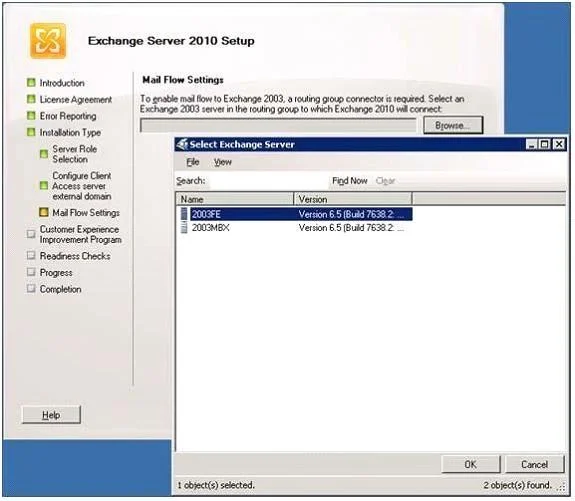
Exhibit
Options
- ACreate two SMTP connections and one Active Directory SMTP site link.
- BCreate a new routing group connector and modify the default routing group connector.
- CCreate an X400 connector to Site1 and modify the cost value for the default routing group
- DMove all Exchange Server 2003 servers and Exchange Server 2010 servers to a single
How the community answered
(30 responses)- A3% (1)
- B83% (25)
- C10% (3)
- D3% (1)
Explanation
To coexist you will need to create a routing group connector on the 2003 Exchange server. This will allow the exchange 2010 server to use the 2003 to send and receive emails. You use Routing Group connectors to connect two or more Exchange Server routing groups. You can have one routing group at the corporate office and a separate routing group at a remote office. The routing groups would be joined by a routing group connector. That connector would designate one server in each routing group as a bridgehead server. Exchange traffic flowing between routing groups can only be sent between bridgehead servers. The first routing group connector between Exchange 2010 and Exchange 2003 is created and configured during installation of the first Hub Transport server role in an existing Exchange organization. During the initial CAS/HT install it asked for a 2003 bridgehead. In Exchange 2003:
Topics
Community Discussion
No community discussion yet for this question.