
4A0-107 · Question #84
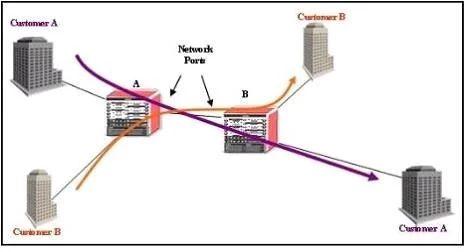
Click the exhibit button below. Each router is interconnected by a single GigE link, as shown in the diagram below. Note: The arrows show the direction of traffic flow. Traffic from Customer A and…
The correct answer is A. True. Option A is correct because in QoS-enabled routing architectures (such as Juniper Networks), forwarding classes define queue membership - not the traffic's source. When packets from Customer A and Customer B arrive at Router B's ingress and have been classified into the same…
Question
Click the exhibit button below. Each router is interconnected by a single GigE link, as shown in the diagram below. Note: The arrows show the direction of traffic flow. Traffic from Customer A and Customer B that is classified to the same forwarding class is queued together at the ingress of Router B.
Exhibit
Options
- ATrue
- BFalse
How the community answered
(30 responses)- A87% (26)
- B13% (4)
Explanation
Option A is correct because in QoS-enabled routing architectures (such as Juniper Networks), forwarding classes define queue membership - not the traffic's source. When packets from Customer A and Customer B arrive at Router B's ingress and have been classified into the same forwarding class (e.g., "best-effort" or "expedited-forwarding"), they are placed into the same ingress queue regardless of which customer originated the traffic. This shared queuing behavior means scheduling decisions at Router B treat both customers' packets identically within that class.
Option B (False) is incorrect because it implies per-customer queue separation, but routers do not inherently segregate queues by customer origin - they segregate by forwarding class. Once classification happens upstream, the forwarding class label is what drives queuing, not the source.
Memory tip: Think of forwarding classes as "lanes on a highway" - cars (packets) from different drivers (customers) merge into the same lane (queue) if they're going the same speed class. The lane doesn't care who's driving, only which lane they belong to.
Topics
Community Discussion
No community discussion yet for this question.