nerdexam
Cisco

352-011 · Question #32

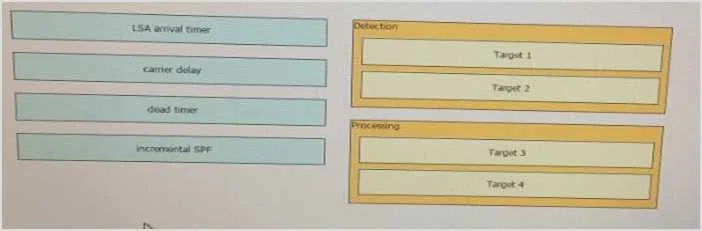
DRAG DROP Classify the OSPF Fast Network Convergence technique by dragging the techniques on the left and dropping them into the corresponding categories on the right. Answer: Detection: carrier…

The correct answer is A. carrier delay -> Detection B. dead timer -> Detection C. LSA arrival timer -> Processing D. incremental SPF -> Processing. All four options are correct because OSPF Fast Convergence techniques split neatly into two phases: detecting that something changed in the network, and processing that change to update routing tables. Carrier delay and dead timer belong to Detection because they govern how…

Enterprise Network Design

Question

DRAG DROP Classify the OSPF Fast Network Convergence technique by dragging the techniques on the left and dropping them into the corresponding categories on the right. Answer:

Detection: carrier delay, dead timer Processing: LSA arrival timer, incremental SPF

Exhibit
352-011 question #32 exhibit

Options

  • Acarrier delay -> Detection
  • Bdead timer -> Detection
  • CLSA arrival timer -> Processing
  • Dincremental SPF -> Processing

How the community answered

(44 responses)
  • A
    100% (44)

Explanation

All four options are correct because OSPF Fast Convergence techniques split neatly into two phases: detecting that something changed in the network, and processing that change to update routing tables.

Carrier delay and dead timer belong to Detection because they govern how quickly the router notices a problem - carrier delay reduces the interface's hold-down period before reporting a link failure, while the dead timer controls how long OSPF waits before declaring a neighbor unreachable. Shortening either gets the router to react sooner. LSA arrival timer and incremental SPF belong to Processing because they affect what happens after a change is detected - the LSA arrival timer limits the minimum gap between accepting duplicate LSAs (throttling the flood), while incremental SPF recalculates only the affected portion of the topology tree instead of the full SPF run, reducing CPU time.

Since this is a classification question with no wrong options, there are no distractors - every technique is correctly placed.

Memory tip: Think Detect → Process like an alarm system. Detection = the sensors (carrier delay, dead timer) that trigger the alarm. Processing = the response team (LSA arrival timer, incremental SPF) that handles the incident. "Dead and Carrier detect the danger; LSA and SPF process the plan."

Topics

#OSPF#fast convergence#LSA#incremental SPF

Community Discussion

No community discussion yet for this question.

Full 352-011 Practice