
350-401 · Question #478
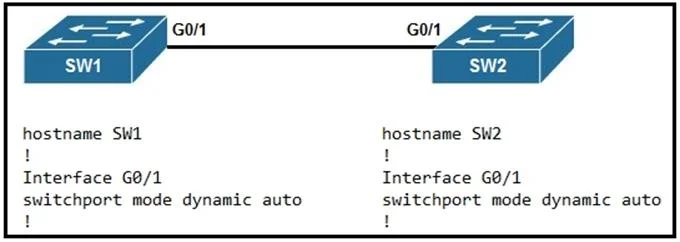
Refer to the exhibit. An engineer attempts to configure a trunk between switch SW1 and switch SW2 using DTP, but the trunk does not form. Which command should the engineer apply to switch SW2 to…
The correct answer is A. switchport mode dynamic desirable. DTP Trunk Formation Explanation Option A is correct because when SW1 is configured with switchport mode dynamic auto, it passively waits for the other switch to initiate trunking - it will never actively negotiate. SW2 must be set to switchport mode dynamic desirable, which…
Question
Refer to the exhibit. An engineer attempts to configure a trunk between switch SW1 and switch SW2 using DTP, but the trunk does not form. Which command should the engineer apply to switch SW2 to resolve this issue?
Exhibits
Options
- Aswitchport mode dynamic desirable
- Bswitchport nonegotiate
- Cno switchport
- Dswitchport mode access
How the community answered
(29 responses)- A83% (24)
- B3% (1)
- C3% (1)
- D10% (3)
Explanation
DTP Trunk Formation Explanation
Option A is correct because when SW1 is configured with switchport mode dynamic auto, it passively waits for the other switch to initiate trunking - it will never actively negotiate. SW2 must be set to switchport mode dynamic desirable, which actively sends DTP negotiation frames, allowing the trunk to successfully form between the two switches.
Why the distractors are wrong:
- Option B (switchport nonegotiate) disables DTP entirely, which would prevent trunking negotiation rather than enable it
- Option C (no switchport) converts the port to a routed Layer 3 interface, which is unrelated to trunk configuration
- Option D (switchport mode access) forces the port into access mode, which actively prevents a trunk from forming
Memory Tip: Think of it as a handshake - Auto is shy and waits to be approached, while Desirable is outgoing and initiates the conversation. Two "shy" (auto) ports will never initiate with each other, so you need at least one "desirable" port to get the trunk talking. Remember: Auto + Auto = No Trunk, but Desirable + Auto = Trunk
Topics
Community Discussion
No community discussion yet for this question.