
350-401 · Question #450
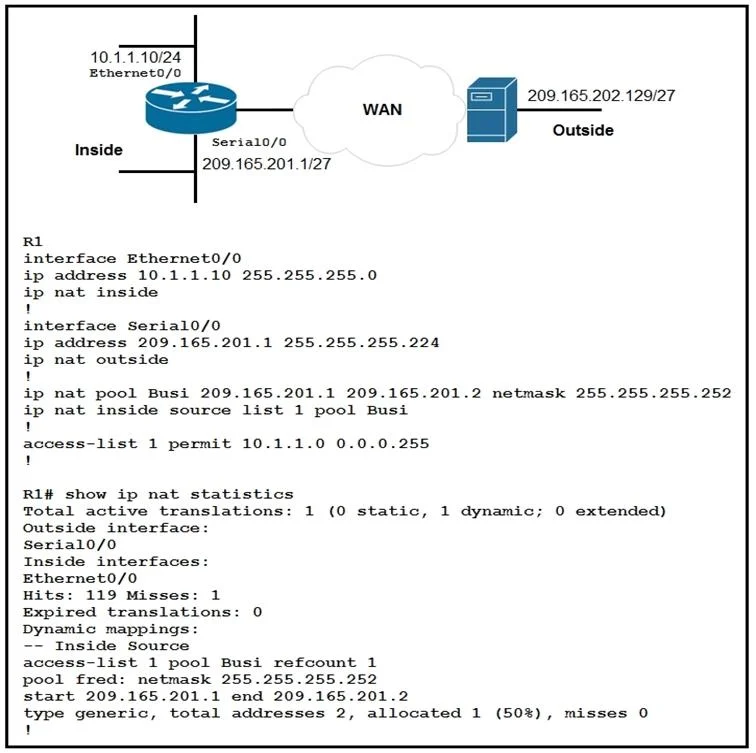
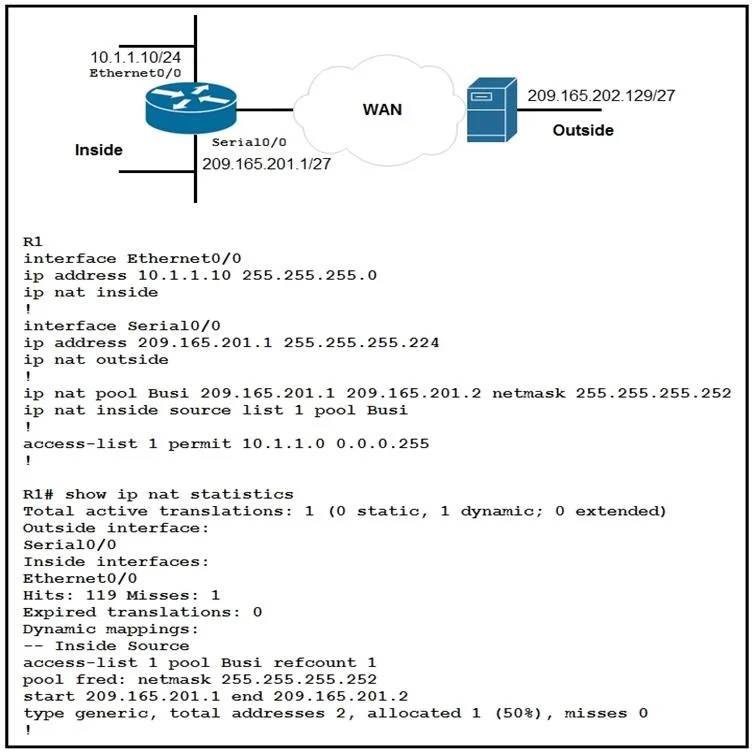
Refer to the exhibit. A network engineer configures NAT on R1 and enters the show command to verify the configuration. What does the output confirm?
The correct answer is A. The first pocket triggered NAT to add on entry to NAT table. The miss: 1 entry in the NAT translation table output indicates that a packet did not find an existing translation and consequently triggered the creation of a new NAT entry.
Question
Exhibits
Options
- AThe first pocket triggered NAT to add on entry to NAT table
- BR1 is configured with NAT overload parameters
- CA Telnet from 160.1.1 1 to 10.1.1.10 has been initiated.
- DR1 to configured with PAT overload parameters
How the community answered
(55 responses)- A84% (46)
- B9% (5)
- C5% (3)
- D2% (1)
Why each option
The `miss: 1` entry in the NAT translation table output indicates that a packet did not find an existing translation and consequently triggered the creation of a new NAT entry.
The `miss: 1` counter in the `show ip nat translations` output confirms that one packet arrived that did not have an existing NAT translation, causing the router to perform a lookup, apply NAT rules, and create a new entry in the NAT table.
While the presence of port numbers might suggest PAT (a form of NAT overload), the `miss: 1` value itself directly confirms the dynamic creation of a translation, not the specific configuration of NAT overload parameters.
The translation shows `Inside local: 192.168.1.1:1026` mapping to `Inside global: 10.1.1.10:23`, indicating an inside host (`192.168.1.1`) is initiating a connection (likely Telnet, port 23) to an outside host, not a Telnet from 160.1.1.1 to 10.1.1.10.
Similar to B, this output primarily confirms the event of a new translation being added, rather than the explicit configuration of PAT overload parameters. Other commands are used to confirm PAT configuration.
Concept tested: NAT translation table interpretation (miss count)
Source: https://www.cisco.com/c/en/us/td/docs/ios-xml/ios/ipaddr_nat/configuration/xe-16/nat-xe-16-book/ipnat-cfg-nat.html
Topics
Community Discussion
No community discussion yet for this question.