
350-401 · Question #378
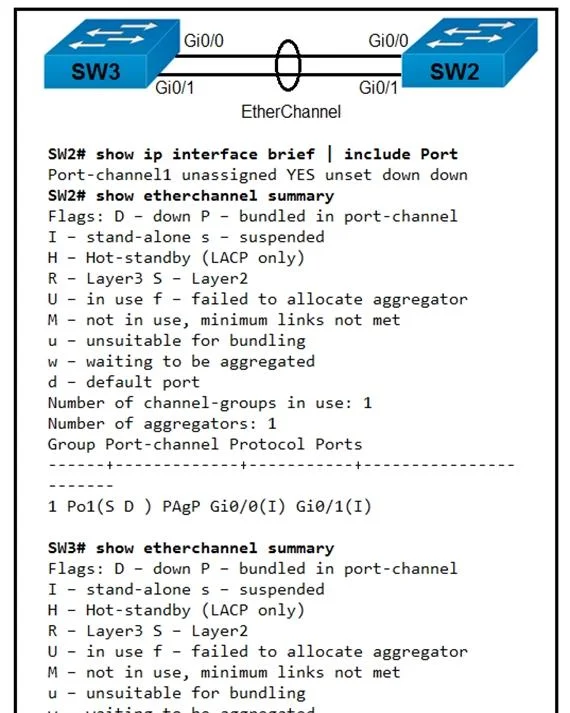
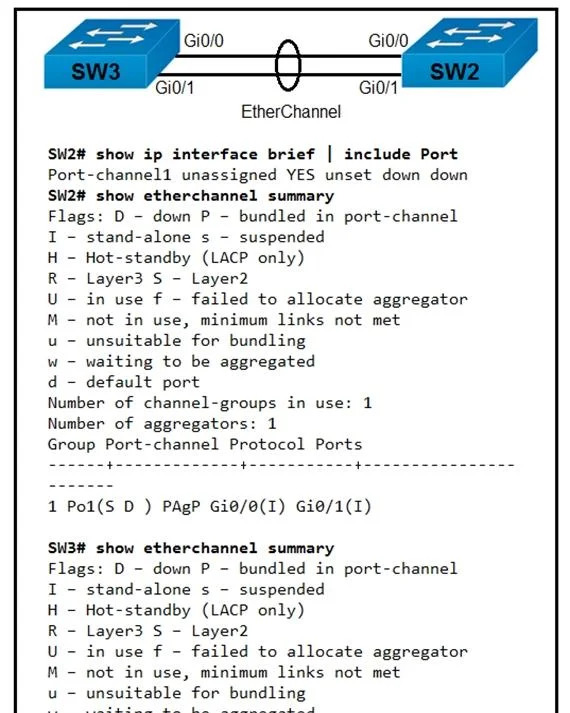
Refer to the exhibit. Which action resolves the EtherChannel issue between SW2 and SW3?
The correct answer is C. Configure channel-group 1 mode desirable on both interfaces. EtherChannel Negotiation Explanation Option C is correct because when both switches use "desirable" mode (PAgP), at least one side actively initiates negotiation while the other can respond - but configuring both as desirable ensures active negotiation from each end…
Question
Refer to the exhibit. Which action resolves the EtherChannel issue between SW2 and SW3?
Exhibits
Options
- AConfigure switchport mode trunk on SW2.
- BConfigure switchport nonegotiate on SW3
- CConfigure channel-group 1 mode desirable on both interfaces.
- DConfigure channel-group 1 mode active on both interfaces.
How the community answered
(20 responses)- A5% (1)
- B15% (3)
- C75% (15)
- D5% (1)
Explanation
EtherChannel Negotiation Explanation
Option C is correct because when both switches use "desirable" mode (PAgP), at least one side actively initiates negotiation while the other can respond - but configuring both as desirable ensures active negotiation from each end, successfully forming the EtherChannel bundle. The exhibit likely shows a mismatch where one side is in a passive or incompatible mode, and "desirable-desirable" is a valid PAgP combination.
Why the distractors are wrong:
- A is wrong because trunk configuration affects VLAN traffic, not EtherChannel formation; the trunk issue is separate from the bundling protocol mismatch.
- B is wrong because
nonegotiatedisables DTP (trunk negotiation), not PAgP/LACP, and would not resolve an EtherChannel protocol issue. - D is wrong because "active" is an LACP keyword, and if the current configuration uses PAgP (desirable/auto), mixing protocols would prevent the channel from forming - both sides must use the same protocol.
Memory Tip: Think of PAgP modes like a conversation - "desirable" means "I want to talk!" and "auto" means "I'll talk if you start." Two "desirable" switches always successfully negotiate, while two "auto" switches silently wait for each other and never form a channel.
Topics
Community Discussion
No community discussion yet for this question.