
350-401 · Question #343
Which measure is used by an NTP server to indicate its closeness to the authoritative time source?
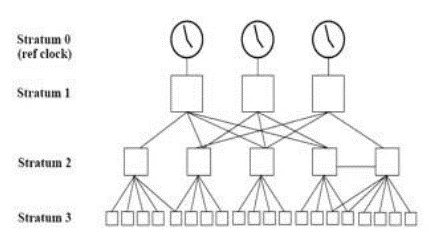
The correct answer is C. stratum. Stratum is the metric NTP uses to indicate how many levels away a server is from the authoritative time source (stratum 0), such as an atomic clock or GPS device. A stratum 1 server is directly connected to the authoritative source, stratum 2 syncs from stratum 1, and so on…
Question
Which measure is used by an NTP server to indicate its closeness to the authoritative time source?
Exhibit
Options
- Atime zone
- Bhop count
- Cstratum
- Dlatency
How the community answered
(22 responses)- B9% (2)
- C86% (19)
- D5% (1)
Explanation
Stratum is the metric NTP uses to indicate how many levels away a server is from the authoritative time source (stratum 0), such as an atomic clock or GPS device. A stratum 1 server is directly connected to the authoritative source, stratum 2 syncs from stratum 1, and so on - the lower the stratum number, the more accurate and "close" the server is to the true time source.
Why the distractors are wrong:
- Time zone (A) is a geographic/regional offset from UTC and has nothing to do with time accuracy or source proximity.
- Hop count (B) is a networking term used in routing protocols (like TTL) to measure network distance, not NTP hierarchy.
- Latency (D) measures network delay and while NTP does account for it in calculations, it is not the metric used to represent closeness to the authoritative source.
Memory tip: Think of "stratum" like floors in a building - the authoritative clock is in the basement (stratum 0), and each floor up (stratum 1, 2, 3...) gets you further away from the source. Stratum = Steps from the source.
Topics
Community Discussion
No community discussion yet for this question.