
350-401 · Question #1280
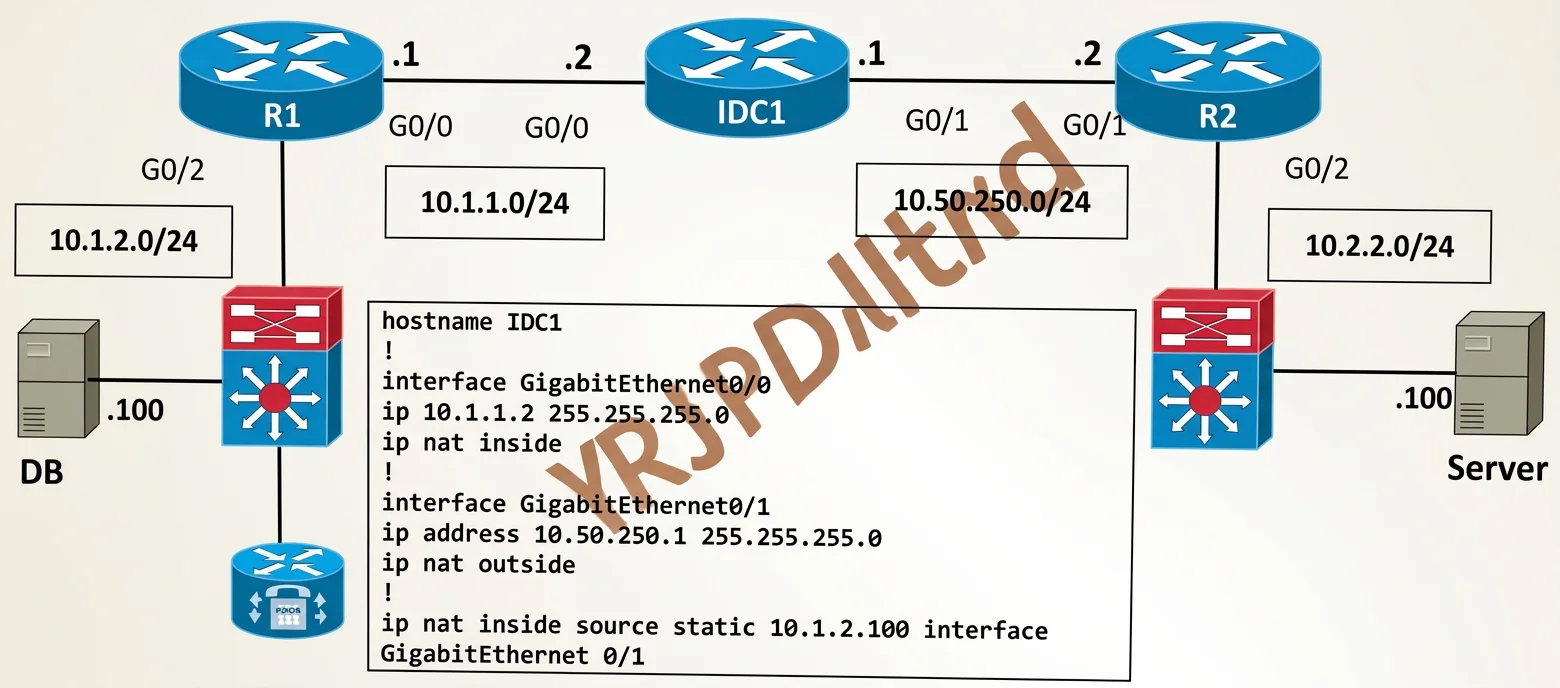
Refer to the exhibit. The server in DC2 is expecting traffic from the database in DC1 to use the source network of 10.50.250.0/24. The server sends the initial request. The inside global lP is…
The correct answer is B. The server and the database can initiate communication. With the server initiating communication and its traffic being translated to an IP within the expected source network, both the server and the database can successfully initiate and establish communication.
Question
Exhibits
Options
- AThe server and the database cannot communicate
- BThe server and the database can initiate communication
- COnly the database can initiate communication
- DOnly the server can initiate communication
How the community answered
(59 responses)- A14% (8)
- B78% (46)
- C3% (2)
- D5% (3)
Why each option
With the server initiating communication and its traffic being translated to an IP within the expected source network, both the server and the database can successfully initiate and establish communication.
The NAT configuration ensures the source IP matches the expected network, so communication should be possible.
The server in DC2 initiates the request, and its source IP is translated to 10.50.250.1 (the inside global IP), which falls within the 10.50.250.0/24 network that the DC1 database expects, allowing communication to be initiated from the server.
The server initiates the request, and the NAT configuration allows its traffic to be accepted by the database, enabling bidirectional communication once established.
The server is initiating communication, and the NAT configuration ensures the database accepts it, meaning communication can be initiated by the server and then flow bidirectionally.
Concept tested: NAT and communication initiation
Source: https://www.cisco.com/c/en/us/td/docs/ios-xml/ios/ipaddr_nat/configuration/xe-3s/nat-xe-3s-book/ipnat-cfg.html
Topics
Community Discussion
No community discussion yet for this question.