
220-1002 · Question #195
Joe, a user, calls the help desk from a coffee shop while on a business trip to report the WiFi hotspot on his phone is extremely slow. The technician runs a speed test from a laptop connected to…
The correct answer is B. Someone else is using Joe's hotspot due to weak password. The problem of Joe's slow hotspot is most likely caused by unauthorized users due to a weak password, consuming bandwidth and degrading performance.
Question
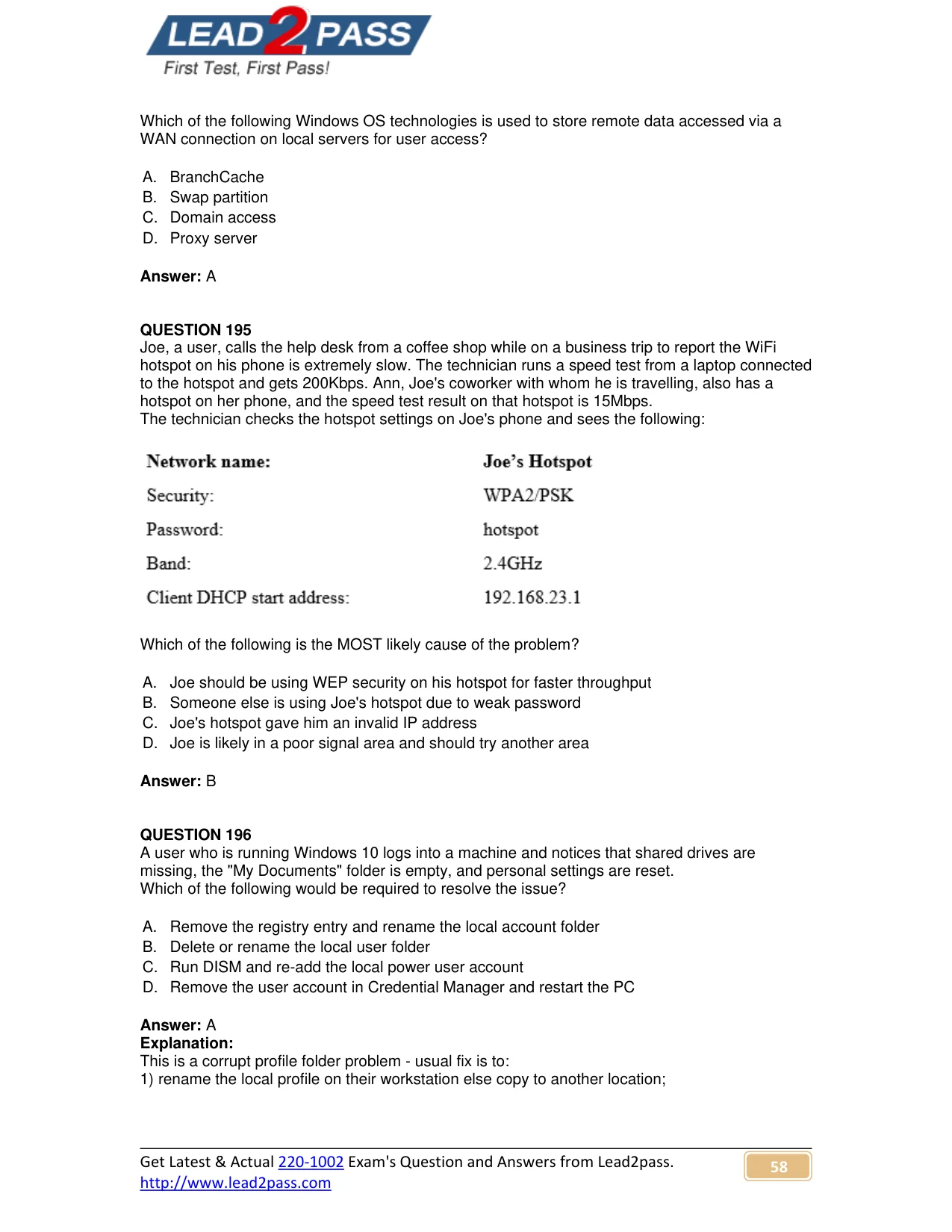
Joe, a user, calls the help desk from a coffee shop while on a business trip to report the WiFi hotspot on his phone is extremely slow. The technician runs a speed test from a laptop connected to the hotspot and gets 200Kbps. Ann, Joe's coworker with whom he is travelling, also has a hotspot on her phone, and the speed test result on that hotspot is 15Mbps. The technician checks the hotspot settings on Joe's phone and sees the following:
Which of the following is the MOST likely cause of the problem?
Exhibit
Options
- AJoe should be using WEP security on his hotspot for faster throughput
- BSomeone else is using Joe's hotspot due to weak password
- CJoe's hotspot gave him an invalid IP address
- DJoe is likely in a poor signal area and should try another area
How the community answered
(60 responses)- A12% (7)
- B80% (48)
- C3% (2)
- D5% (3)
Why each option
The problem of Joe's slow hotspot is most likely caused by unauthorized users due to a weak password, consuming bandwidth and degrading performance.
Concept tested: The core technical concepts tested include Wi-Fi security best practices (specifically the importance of strong passwords for WPA2/PSK networks), network troubleshooting methodology (analyzing symptoms and comparing with known good configurations), and understanding the impact of unauthorized network access on bandwidth and performance.
Source: null
Topics
Community Discussion
No community discussion yet for this question.