
USMLE · Question #573
A 31-year-old woman comes to the physician because of a 2-week history of malaise, nausea, vomiting, and decreased appetite. She is a known user of intravenous heroin. She appears chronically ill…
The correct answer is C. Lifelong persistent infection. See the full explanation below for the reasoning.
Question
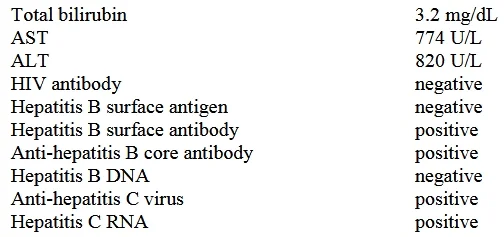
A 31-year-old woman comes to the physician because of a 2-week history of malaise, nausea, vomiting, and decreased appetite. She is a known user of intravenous heroin. She appears chronically ill. She is 165 cm (5 ft 5 in) tall and weighs 47kg (103 lb); BMI is 17 kg/m2. Her temperature is 36.7°C (98.1°F), pulse is 90/min, respirations are 18/min, and blood pressure is 114/68 mmHg. Physical examination shows scleral icterus and a liver span of 16 cm. The spleen is not palpable. Serum studies show:
Which of the following is the most likely outcome of this patient's infection?
Exhibit
Options
- AComplete resolution of infection
- BLatent infection with intermittent viremia
- CLifelong persistent infection
- DPatient death from acute infection
How the community answered
(35 responses)- A9% (3)
- B6% (2)
- C83% (29)
- D3% (1)
Community Discussion
No community discussion yet for this question.