
SY0-701 · Question #1071
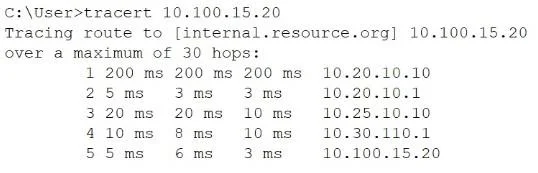
While troubleshooting an internal resource's poor performance for an end user, a network engineer performs a traceroute on the end device and receives the following output: The engineer performs a…
The correct answer is B. On-path attack. The slow traceroute shows an extra first hop (10.20.10.10) with very high latency that does not appear when tracing from a known-good device on the same port. This indicates the affected device’s traffic is being redirected through an additional intermediary on the path…
Question
While troubleshooting an internal resource's poor performance for an end user, a network engineer performs a traceroute on the end device and receives the following output:
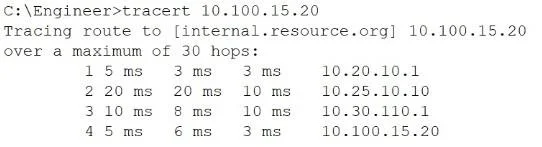
The engineer performs a traceroute from a device that is not experiencing poor performance but is connected to the same port. The engineer receives the following output:
Which of the following is most likely occurring?
Exhibits
Options
- AARP cache poisoning
- BOn-path attack
- CResource exhaustion
- DDNS spoofing
How the community answered
(55 responses)- A27% (15)
- B55% (30)
- C13% (7)
- D5% (3)
Explanation
The slow traceroute shows an extra first hop (10.20.10.10) with very high latency that does not appear when tracing from a known-good device on the same port. This indicates the affected device’s traffic is being redirected through an additional intermediary on the path, consistent with an on-path (man-in-the-middle) attack.
Community Discussion
No community discussion yet for this question.