
MS-102 · Question #464
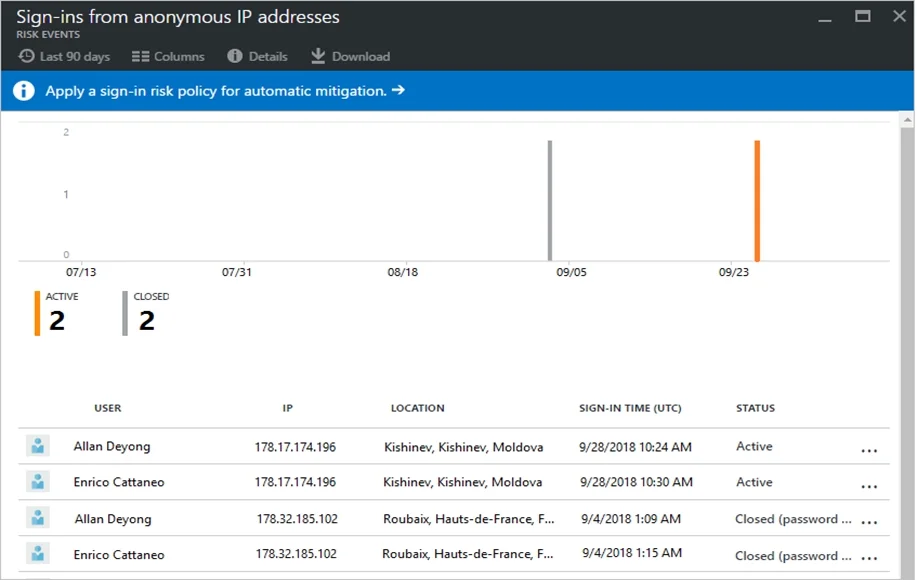
From the Microsoft Azure Active Directory (Azure AD) Identity Protection dashboard, you view the risk events shown in the exhibit. (Click the Exhibit tab.) You need to reduce the likelihood that the…
The correct answer is D. From the Conditional access blade in the Azure Active Directory admin center, create named. The correct answer is D: create named locations from the Conditional Access blade in the Azure Active Directory admin center. Azure AD Identity Protection flags sign-ins as risky when they originate from unfamiliar or unexpected locations. By defining named locations (known IP…
Question
From the Microsoft Azure Active Directory (Azure AD) Identity Protection dashboard, you view the risk events shown in the exhibit. (Click the Exhibit tab.) You need to reduce the likelihood that the sign-ins are identified as risky. What should you do?
Exhibit
Options
- AFrom the Security & Compliance admin center, create a classification label.
- BFrom the Security & Compliance admin center, add the users to the Security Readers role group.
- CFrom the Azure Active Directory admin center, configure the trusted IPs for multi-factor
- DFrom the Conditional access blade in the Azure Active Directory admin center, create named
How the community answered
(20 responses)- A10% (2)
- B5% (1)
- C5% (1)
- D80% (16)
Explanation
The correct answer is D: create named locations from the Conditional Access blade in the Azure Active Directory admin center. Azure AD Identity Protection flags sign-ins as risky when they originate from unfamiliar or unexpected locations. By defining named locations (known IP ranges, countries, or regions), you tell Identity Protection and Conditional Access that sign-ins from those locations are expected and trusted, directly reducing the risk score. Option C (MFA trusted IPs) is narrower-it only bypasses MFA prompts for specific IPs but does not broadly reduce Identity Protection risk event signals the way named locations do.
Topics
Community Discussion
No community discussion yet for this question.