
JN0-1103 · Question #9
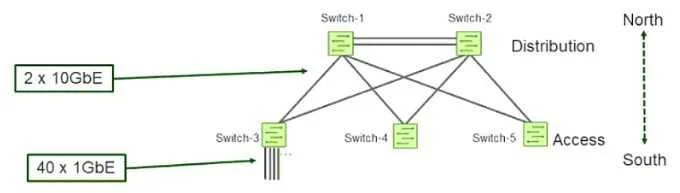
Referring to the exhibit, which oversubscription ratio applies to Switch-3?
The correct answer is B. 4:1. Option B (4:1) is correct because oversubscription ratio is calculated as total downlink (access) bandwidth ÷ total uplink bandwidth. Based on the exhibit, Switch-3's downlink capacity is four times greater than its uplink capacity, meaning up to four times more traffic could…
Question
Referring to the exhibit, which oversubscription ratio applies to Switch-3?
Exhibit
Options
- A2:4
- B4:1
- C2:1
- D1:2
How the community answered
(56 responses)- A4% (2)
- B75% (42)
- C14% (8)
- D7% (4)
Explanation
Option B (4:1) is correct because oversubscription ratio is calculated as total downlink (access) bandwidth ÷ total uplink bandwidth. Based on the exhibit, Switch-3's downlink capacity is four times greater than its uplink capacity, meaning up to four times more traffic could theoretically be generated than the uplinks can carry simultaneously - a standard access-layer design tradeoff.
Why the distractors are wrong:
- A (2:4) simplifies to 1:2, which would actually mean the uplinks outpace the downlinks - the opposite of oversubscription.
- C (2:1) describes a lower oversubscription (only 2x), which doesn't match Switch-3's port/uplink configuration in the exhibit.
- D (1:2) is the same as A's simplified form - more uplink than downlink bandwidth, meaning no oversubscription exists at all.
Memory tip: Think of oversubscription as "how many ports are fighting over each uplink lane." The ratio is always downlinks : uplinks, so a bigger first number means more contention. If you see 4:1, four units of traffic compete for one unit of uplink - that's oversubscribed. Flip it (1:4 or 1:2) and you have surplus uplink capacity, which is undersubscribed.
Topics
Community Discussion
No community discussion yet for this question.