
JN0-1103 · Question #34
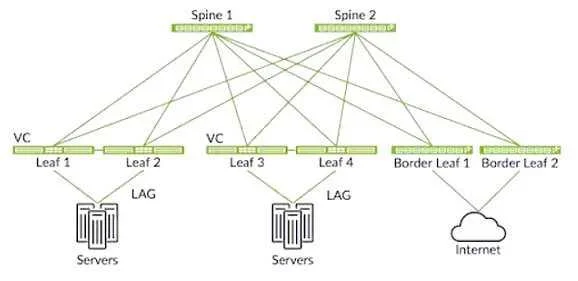
Referring to the exhibit. After a series of outages in an existing network, you are asked to analyze and provide recommendations for resiliency for the data center network shown in the exhibit…
The correct answer is B. Replace the Virtual Chassis with ESI-LAG from the leafs facing the servers. Option B is correct because a Virtual Chassis at the leaf layer creates a management plane single point of failure - all member switches share one logical management plane (the primary Routing Engine controls the group), meaning a master RE failure can disrupt management of the…
Question
Referring to the exhibit. After a series of outages in an existing network, you are asked to analyze and provide recommendations for resiliency for the data center network shown in the exhibit. Which improvement should you recommend to eliminate management plane single points of failure in this scenario?
Exhibit
Options
- AConfigure ESI-LAG on the spines facing the leafs.
- BReplace the Virtual Chassis with ESI-LAG from the leafs facing the servers.
- CConfigure a Virtual Chassis between the spines.
- DReplace the Virtual Chassis with VRRP configured on the servers.
How the community answered
(13 responses)- B85% (11)
- C8% (1)
- D8% (1)
Explanation
Option B is correct because a Virtual Chassis at the leaf layer creates a management plane single point of failure - all member switches share one logical management plane (the primary Routing Engine controls the group), meaning a master RE failure can disrupt management of the entire virtual device. Replacing it with ESI-LAG (in an EVPN/VXLAN fabric) gives each leaf switch an independent management plane while still providing active-active multi-homing to servers, eliminating the SPOF.
Why the distractors are wrong:
- A (ESI-LAG on spines facing leafs): This doesn't address the Virtual Chassis SPOF where it exists - at the leaf-to-server boundary - and spine-to-leaf links in a proper spine-leaf design don't typically require ESI-LAG.
- C (Virtual Chassis between the spines): This adds a management plane SPOF at the spine tier rather than removing one - the opposite of what's needed.
- D (VRRP on servers): VRRP is a first-hop gateway redundancy protocol configured on network devices, not a multi-homing solution; it does nothing to eliminate the shared management plane that the Virtual Chassis imposes.
Memory tip: Think of it this way - "Virtual Chassis = Virtually one point of failure." ESI-LAG keeps switches independent (separate management planes) while still appearing bonded to servers, so losing one switch never takes down a shared control plane.
Topics
Community Discussion
No community discussion yet for this question.