
HPE0-S59 · Question #76
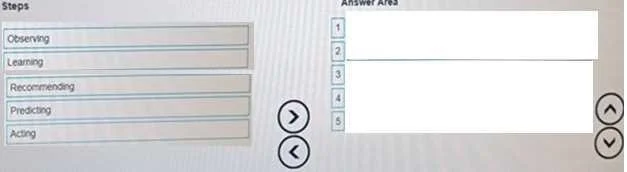
Drag and Drop Question Put the steps of the HPE infosight flow in the correct order. Answer:
The correct answer is Observing; Learning; Predicting; Recommending; Acting. HPE InfoSight Flow - Explained HPE InfoSight is an AI-driven predictive analytics platform that collects telemetry from HPE storage and compute systems to prevent problems before they occur. The five-step flow follows a logical data-to-action pipeline. --- The Correct Order and…
Question
Drag and Drop Question Put the steps of the HPE infosight flow in the correct order. Answer:
Exhibit
Answer Area
Drag items
Correct arrangement
- Observing
- Learning
- Predicting
- Recommending
- Acting
Explanation
HPE InfoSight Flow - Explained
HPE InfoSight is an AI-driven predictive analytics platform that collects telemetry from HPE storage and compute systems to prevent problems before they occur. The five-step flow follows a logical data-to-action pipeline.
The Correct Order and Why
1. Observing InfoSight starts by collecting raw telemetry data from connected HPE systems (storage arrays, servers, etc.) - metrics like latency, capacity, temperature, and error events. Nothing else is possible without raw data first. This is the data ingestion layer.
2. Learning The platform uses machine learning to build models from the observed data. It identifies baselines, correlates patterns across millions of data points from the global install base, and understands what "normal" looks like. You can't predict anything without first learning from history.
3. Predicting With trained models, InfoSight forecasts future problems - predicting drive failures, capacity exhaustion, or performance degradation before they happen. Prediction comes before recommendations because you need to know what is likely to occur before you can advise what to do about it.
4. Recommending Based on predictions, InfoSight surfaces actionable guidance to admins - specific remediation steps or configuration changes. Recommendations are the human-readable output of the prediction engine.
5. Acting The final step is executing the recommended action - either by the admin manually or through automated remediation. Action is last because it is the outcome the entire pipeline drives toward.
Common Mistakes
| Mistake | Why It's Wrong |
|---|---|
| Swapping Predicting and Recommending | Recommendations are derived from predictions - you can't recommend a fix without first predicting the problem |
| Placing Learning after Predicting | You must learn from past data before you can predict future states |
| Placing Acting before Recommending | Acting without a recommendation would be blind automation - the recommendation is the decision layer |
Memory hook: Think of a doctor analogy - observe symptoms → learn from medical knowledge → predict a diagnosis → recommend treatment → act (prescribe/treat).
Topics
Community Discussion
No community discussion yet for this question.