HPE0-S59 · Question #90
Refer to Exhibit. Your customer plans to update the firmware for the logical interconnect shown. Based on the information in the exhibit, which statement about network connectivity is true?
The correct answer is B. It is possible to update this logical interconnect without network downtime if orchestrated method. Option B is correct because HPE OneView's orchestrated firmware update method updates one interconnect module at a time while the redundant module maintains network connectivity. As long as the logical interconnect is configured with redundant uplinks and active-active or…
Question
Refer to Exhibit. Your customer plans to update the firmware for the logical interconnect shown. Based on the information in the exhibit, which statement about network connectivity is true?
Exhibit
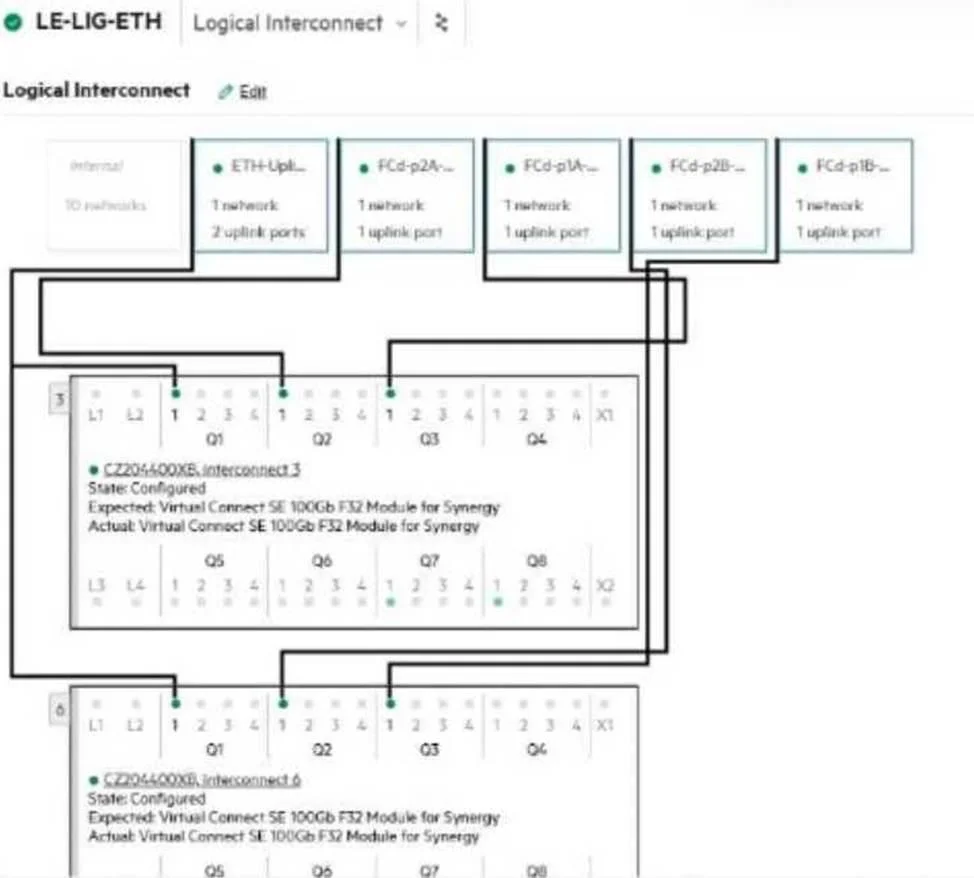
Options
- AOnly the manual orchestration method will allow a firmware upgrade without causing network
- BIt is possible to update this logical interconnect without network downtime if orchestrated method
- CCompute nodes will experience network downtime if the Force option is selected, as it will enforce
- DCompute nodes will experience network downtime not longer than 1 minute regardless of the
How the community answered
(14 responses)- A7% (1)
- B71% (10)
- C14% (2)
- D7% (1)
Explanation
Option B is correct because HPE OneView's orchestrated firmware update method updates one interconnect module at a time while the redundant module maintains network connectivity. As long as the logical interconnect is configured with redundant uplinks and active-active or active-standby connections, compute nodes experience zero network downtime during the upgrade.
Why the distractors are wrong:
- A is backwards - it claims manual orchestration prevents downtime, but it is actually the orchestrated (automatic) method in OneView that handles sequencing safely. Manual mode gives the admin control but does not inherently guarantee no downtime.
- C implies the Force option alone causes downtime by enforcing something (likely a reset), but Force simply bypasses compatibility warnings; it does not override the orchestrated sequencing that protects connectivity.
- D is an overly broad absolute - there is no guaranteed "under 1 minute" downtime window that applies regardless of method or configuration, making this factually unsupportable.
Memory tip: Think "O for Orchestrated = O for Order" - OneView updates modules in order, one at a time, so the other keeps the network alive. Manual = you choose the order = risk of both going down simultaneously.
Topics
Community Discussion
No community discussion yet for this question.
