
FCSS_NST_SE-7.6 · Question #831
Which statement best describes the full state when forming an OSPF adjacency between two peers?
The correct answer is B. The LSDBs on both routers are identical. Option B is correct because the OSPF Full state specifically marks the completion of LSDB synchronization - both routers have exchanged all necessary LSAs via DBD, Request, and Update packets, and their databases are now identical for that adjacency. Why the distractors are…
Question
Exhibit
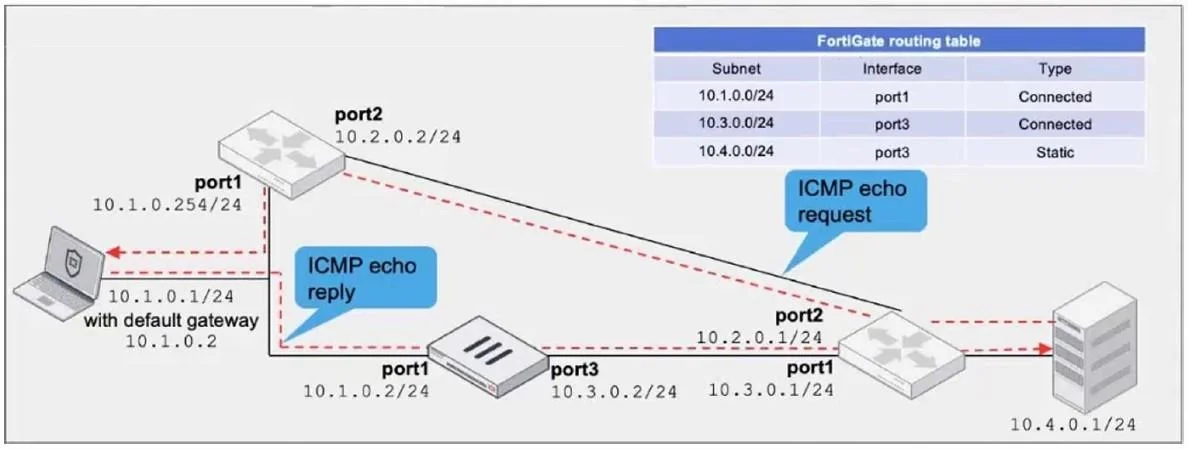
Options
- ACommunication is bi-directional between the two peers.
- BThe LSDBs on both routers are identical.
- CA primary and secondary relationship is negotiated.
- DAll LSA types have been received from the peer.
How the community answered
(34 responses)- A6% (2)
- B91% (31)
- C3% (1)
Explanation
Option B is correct because the OSPF Full state specifically marks the completion of LSDB synchronization - both routers have exchanged all necessary LSAs via DBD, Request, and Update packets, and their databases are now identical for that adjacency.
Why the distractors are wrong:
- A describes the 2-Way state, where routers have seen themselves in each other's Hello packets, confirming bidirectional communication - this happens much earlier in the process.
- C describes the ExStart state, where the master/slave (not primary/secondary) relationship is negotiated to control DBD packet sequencing.
- D is a tempting trap - the Loading state is when a router is still requesting missing LSAs; Full is only reached after all outstanding requests are satisfied, and it's about all needed LSAs, not necessarily every LSA type.
Memory tip: Map the OSPF states as a story - 2-Way = we see each other, ExStart = who goes first?, Exchange = swapping catalogs (DBDs), Loading = filling in the gaps, Full = libraries match. "Full" = fully identical databases.
Topics
Community Discussion
No community discussion yet for this question.