
DP-300 · Question #135
Hotspot Question From a website analytics system, you receive data extracts about user interactions such as downloads, link clicks, form submissions, and video plays. The data contains the following…
The correct answer is Date: Date Dimension; EventCategory: Event Dimension; EventAction: Event Dimension; EventLabel: Event Dimension; ChannelGrouping: Channel Dimension; TotalEvents: Fact Table; UniqueEvents: Fact Table; SessionsWithEvents: Fact Table. This question tests your ability to design a star schema by correctly classifying columns from a website analytics dataset into either a Fact table or one of the Dimension tables (Date, User, Event/Interaction).
Question
Exhibits
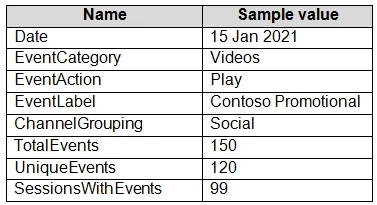
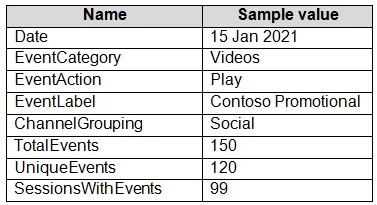
Answer Area
- DateDate DimensionFact TableDate DimensionEvent DimensionChannel Dimension
- EventCategoryEvent DimensionFact TableDate DimensionEvent DimensionChannel Dimension
- EventActionEvent DimensionFact TableDate DimensionEvent DimensionChannel Dimension
- EventLabelEvent DimensionFact TableDate DimensionEvent DimensionChannel Dimension
- ChannelGroupingChannel DimensionFact TableDate DimensionEvent DimensionChannel Dimension
- TotalEventsFact TableFact TableDate DimensionEvent DimensionChannel Dimension
- UniqueEventsFact TableFact TableDate DimensionEvent DimensionChannel Dimension
- SessionsWithEventsFact TableFact TableDate DimensionEvent DimensionChannel Dimension
Explanation
This question tests your ability to design a star schema by correctly classifying columns from a website analytics dataset into either a Fact table or one of the Dimension tables (Date, User, Event/Interaction).
Approach. In a star schema, the Fact table contains quantitative, measurable metrics (measures) and foreign keys to dimension tables. Dimension tables contain descriptive, contextual attributes used for filtering and grouping. Columns like 'interaction_id', 'duration', 'file_size', or numeric counts belong in the Fact table along with foreign keys (date_key, user_key, event_key). Descriptive attributes like 'event_type' (download, click, form submit, video play), 'event_name', or 'page_name' go into an Event/Interaction dimension. User-related attributes like 'user_agent', 'browser', 'country', or 'device_type' go into a User dimension. Date-related fields like 'year', 'month', 'quarter', 'day_of_week' belong in the Date dimension, while the raw date/timestamp (as a surrogate key) links back to the Fact table.
Concept tested. Star schema design: identifying fact tables (numeric measures + foreign keys) versus dimension tables (descriptive attributes), and correctly partitioning columns from a source dataset into the appropriate table type within a dimensional data warehouse model.
Reference. Microsoft Learn - Design a star schema in Azure Synapse Analytics / Data Warehouse dimensional modeling best practices (Kimball methodology)
Topics
Community Discussion
No community discussion yet for this question.