
D-UN-OE-23 · Question #3
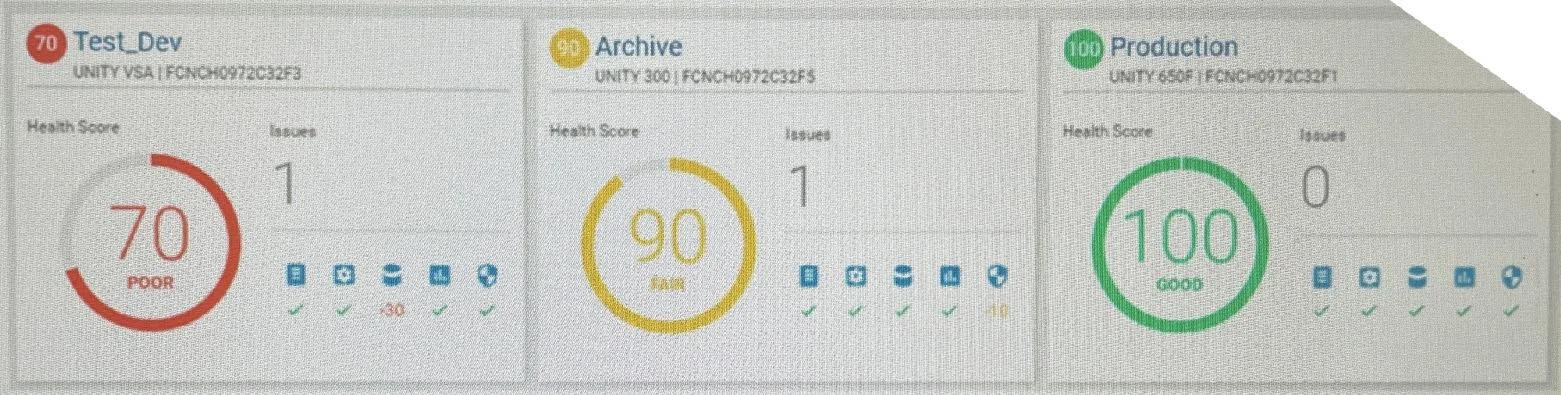
Refer to the exhibit. A storage administrator noticed that the Test_Dev system has turned red What is the cause of this issue?
The correct answer is A. Storage pool performance is impacted because of prolonged disk queue length. Option A is correct because a prolonged disk queue length indicates that I/O requests are backing up faster than the storage system can process them, degrading performance enough to trigger a visual alert (red status) on the Test_Dev system - this is a performance health…
Question
Refer to the exhibit. A storage administrator noticed that the Test_Dev system has turned red What is the cause of this issue?
Exhibit
Options
- AStorage pool performance is impacted because of prolonged disk queue length.
- BStorage pool has a component failure.
- CStorage pool is full and oversubscribed.
- DData protection for this storage pool is not configured.
How the community answered
(33 responses)- A82% (27)
- B3% (1)
- C9% (3)
- D6% (2)
Explanation
Option A is correct because a prolonged disk queue length indicates that I/O requests are backing up faster than the storage system can process them, degrading performance enough to trigger a visual alert (red status) on the Test_Dev system - this is a performance health indicator, not a failure. Option B is wrong because a component failure would typically show a different alert type (such as a degraded or failed state icon), not simply a performance-based red flag. Option C is wrong because an oversubscribed or full pool would trigger capacity warnings, which are separate from performance queue alerts. Option D is wrong because missing data protection (e.g., no RAID or replication) would be flagged during configuration, not manifest as a runtime red status tied to queue behavior.
Memory tip: Think "red = read/write traffic jam" - a prolonged disk queue means requests are stuck in line, like cars piling up on a highway. Performance pain turns things red; broken parts or missing configs use different alert categories.
Topics
Community Discussion
No community discussion yet for this question.